
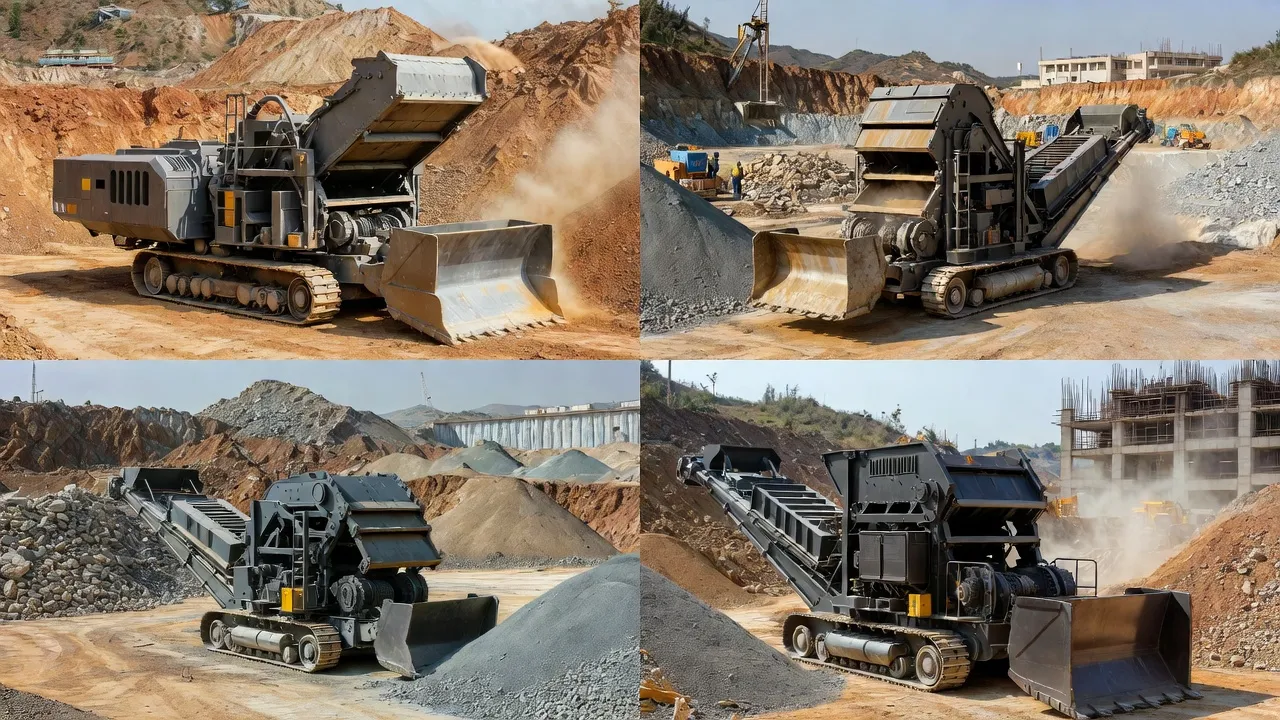
The Construction Sector’s Aggregate Problem — and What On-Site Crushing Actually Solves
Aggregate supply is one of the largest cost and logistics challenges in civil construction. For projects in regional or remote locations, haulage of crushed aggregate from off-site quarries frequently represents 40–60% of the total material cost — not because the aggregate itself is expensive, but because moving it is. Road-accessible quarry stone that would cost $12–18 per tonne at the pit face can arrive on site at $45–80 per tonne once transport, handling, and stockpiling costs are added to the bill. For large infrastructure projects or extended road construction programs, this transport premium accumulates into a material budget item that fundamentally alters project economics.
On-site crushing with a mobile stone crusher directly addresses this cost structure by converting locally available rock — whether naturally occurring on the project corridor or sourced from a nearby borrow pit — into specification-grade aggregate at the point of need. Watanabe’s tractor-mounted stone crushers are particularly well-suited to this application: they require no dedicated electrical infrastructure, can be repositioned along a road alignment as works progress, and the tractor driving the crusher simultaneously provides the site mobility needed for material handling. The result is an integrated, low-overhead aggregate production system with a cost structure that quarry-delivered aggregate simply cannot compete with across projects beyond 30km from the nearest quarry.
Aggregate Production for Concrete and Structural Applications
Meeting Specification Grade for Structural Concrete
Concrete aggregate must conform to AS 2758.1 — the Australian standard for aggregates for concrete — which prescribes particle size distribution, deleterious material limits, Los Angeles abrasion value, and particle shape indices. A stone crusher machine configured for concrete aggregate production typically targets a 10–20mm coarse aggregate fraction and a 0–5mm fine aggregate (crusher fines), with screen aperture selection and rotor speed tuned to produce both fractions in a single pass. Watanabe’s impact crusher rotor geometry inherently produces well-shaped, angular particles that improve concrete workability and mechanical interlock — preferable to the rounded, sub-angular shapes produced by jaw crusher primary circuits in the same application.
Source Rock Selection for Concrete Aggregate Quality
Not all locally available rock is suitable for concrete aggregate regardless of crushing quality. Reactive silica in certain geological formations can cause alkali-silica reaction (ASR) in concrete, leading to long-term deterioration. Soluble sulfates from certain shale or marl deposits contaminate the concrete mix. Watanabe recommends obtaining petrographic analysis of any locally sourced rock before committing to on-site aggregate production for structural concrete, as source rock chemistry overrides crusher performance in determining whether the finished aggregate will meet project specifications. For road base and non-structural fill applications, source rock requirements are considerably less restrictive, making on-site crushing viable across a much broader range of naturally occurring materials.
Road Base and Pavement Sub-Base Production
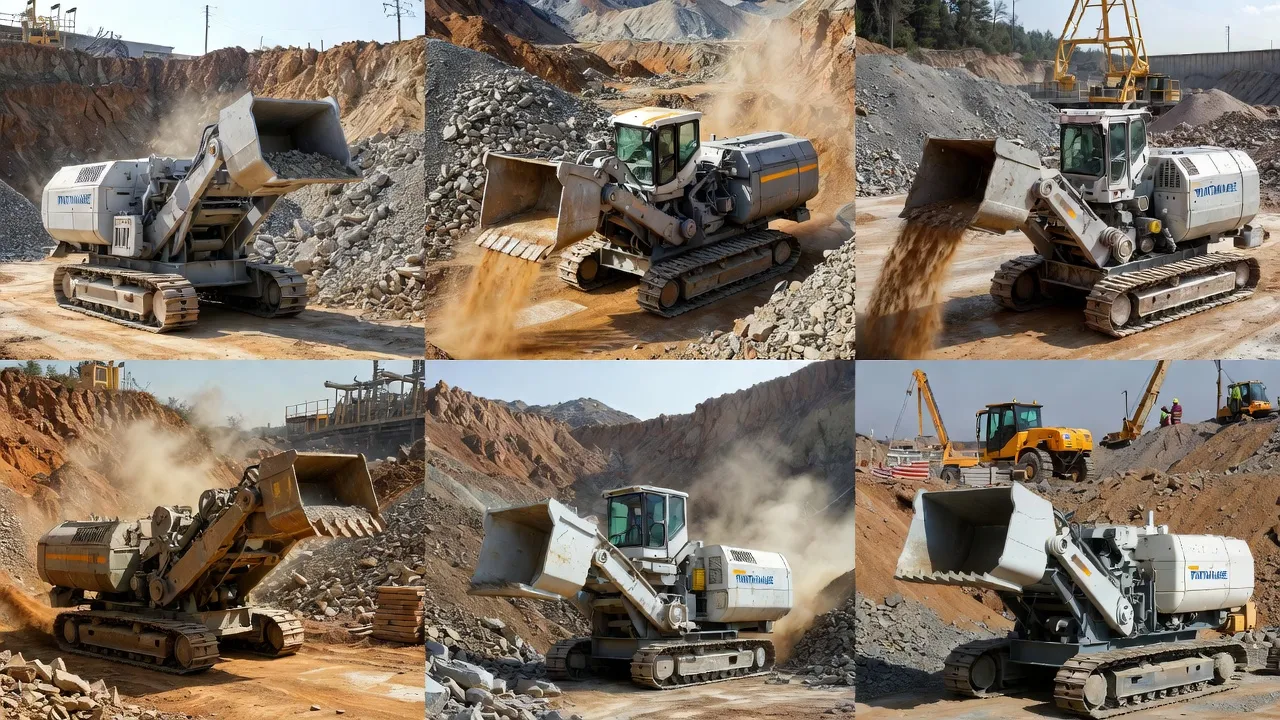
Road base is the single largest volume aggregate application in Australian civil construction, and it is also where on-site crushing with a tractor-mounted stone crusher delivers its most compelling economic case. Unbound granular base course material (typically specified as crushed rock to a 20mm or 40mm graded fraction meeting Austroads requirements) must achieve consistent particle size distribution and adequate compaction characteristics — requirements that modern Watanabe crushers meet reliably when correctly configured for the available source rock. The critical advantage of on-site production is material placement efficiency: crushed rock can be stockpiled directly adjacent to the pavement zone, eliminating double-handling costs associated with quarry delivery, re-spreading, and then trimming to finished grade.
For sealed road construction, the sub-base layer accepts considerably coarser material than the base course above it — typically 75–150mm compacted pavement foundation material where particle shape specification is less critical. This relaxed specification makes sub-base production an ideal first application for on-site crushing programs: the wider acceptable product range accommodates initial operator learning, allows crusher screen configuration trials, and provides immediate material for pavement construction progress while the team optimises settings for tighter-specification base course production in subsequent passes.
On-Site Road Base Production Workflow
1. Source Assessment
Survey corridor for naturally occurring rock. Test compressive strength and particle angularity. Confirm no deleterious chemistry for intended application.
2. Crusher Setup
Install screen grates matching target specification (typically 20mm for base course, 40mm for sub-base). Check hammer wear and rotor balance before production commences.
3. Production Run
Tractor-mounted crusher operates along source rock zone. Material feeds continuously. Crushed product stockpiles adjacent to active pavement zone for direct spread-and-compact operation.
4. QA Sampling
Sample finished product per project QA plan (typically per 500t or per shift). Conduct sieve analysis and Atterberg limit tests. Adjust screen aperture if product drifts outside specification band.
Railway Ballast Production with a Mobile Stone Crusher
Railway ballast is among the most tightly specified aggregate products in civil construction. Australian rail infrastructure standards (ARTC TMC 222 and state equivalents) prescribe particle size distributions typically in the 25–50mm range, with strict limits on flakiness index, Los Angeles abrasion value, sodium sulfate soundness, and percentage of fines below 4.75mm. These requirements favour hard, angular rock such as granite, basalt, and hard quartzite — materials that the mobile stone crusher handles effectively when correctly configured with appropriate screen grates and rotor speeds calibrated for high-angularity output.
The logistics advantage of mobile crushing for railway construction projects is particularly significant. Rail corridor projects frequently extend hundreds of kilometres through terrain where quarry access is limited or transport infrastructure has not yet been established. Deploying a mobile stone crusher within the corridor itself — processing rock excavated from cuttings or sourced from corridor borrow pits — eliminates the haul cost that would otherwise make ballast supply prohibitively expensive for remote rail extensions. This on-corridor production model has been validated on multiple Australian regional rail projects as a cost-reduction strategy with documented savings above 35% versus quarry-delivered ballast.
Demolition Waste Recycling: Turning Building Rubble into Reusable Aggregate
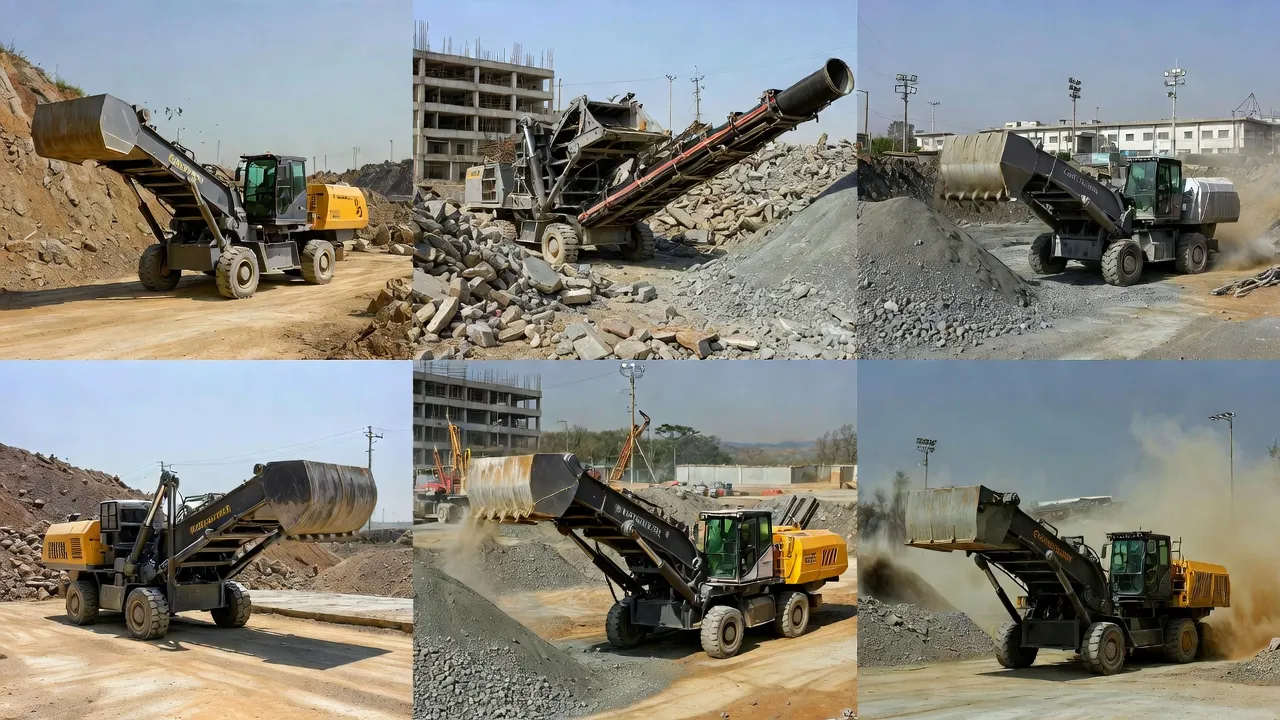
Construction and demolition (C&D) waste represents approximately 40% of total solid waste generated in Australia, and regulatory pressure to divert this material from landfill is increasing significantly across all states and territories. On-site crushing of demolition material — broken concrete slabs, brick rubble, masonry waste, and road pavement offcuts — converts what would otherwise be a disposal cost into a reusable aggregate resource. Recycled concrete aggregate (RCA) produced by crushing old concrete structures meets Austroads requirements for use in sub-base and unbound base course layers in lightly trafficked roads, and as non-structural fill and drainage aggregate in building projects.
The stone crusher attachment for tractor configuration is particularly practical for demolition recycling because it brings the crushing process directly to where the waste material sits — on a demolition site — rather than requiring segregation, loading, transport to a fixed crusher plant, processing, and back-haul of product. This eliminates multiple handling cycles, each of which carries a cost and creates additional dust and noise impacts in urban demolition environments. A single tractor operating the crusher can process 50–120 tonnes of concrete rubble per hour, producing road base material that can be spread and compacted within the same site footprint.
Port and Harbour Construction: Rock Armour and Reclamation Fill
Port construction and coastal protection works generate substantial demand for large-volume rock products across a range of specifications — from fine filter stone (2–20mm) for drainage blankets behind seawall structures, to graded armourstone (100kg–5t individual pieces) for breakwater and revetment works. While armourstone itself is quarried and placed rather than crushed, the substantial volumes of smaller-fraction stone required for filter layers, bedding materials, and reclamation fill within port construction projects are ideally sourced through on-site or near-site crushing programs. Watanabe’s heavy-duty crusher configurations can produce filter stone and bedding aggregate from local rock sources at throughputs that match the demands of major port works programmes.
Reclamation fill for land formation behind seawall structures accepts coarser specification material with broader grading tolerances than pavement aggregate, making this an efficient application for on-site crushing where tighter product specifications are less critical. Rock excavated during port basin dredging or harbour deepening, when compositionally suitable, can be processed through a tractor-mounted stone crusher directly at the reclamation fill zone — eliminating transport entirely and converting a potential spoil management cost into a construction material supply benefit.
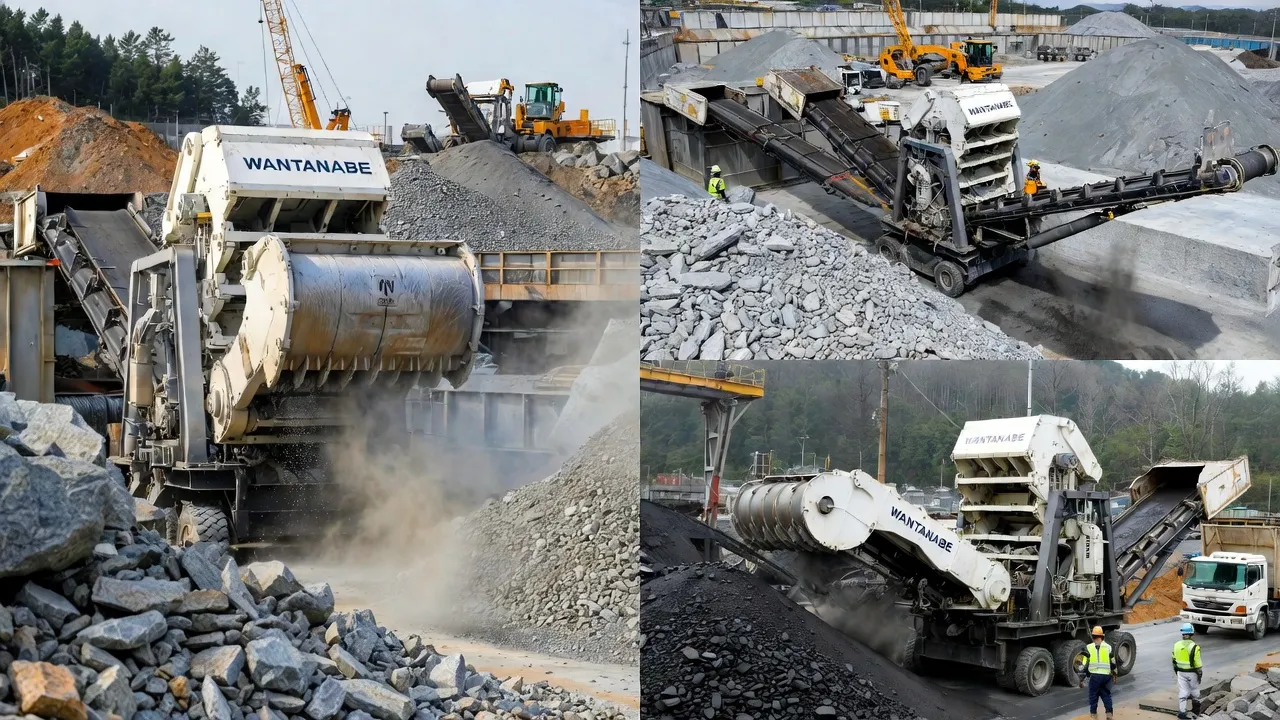
Tractor-Mounted vs. Standalone Mobile Crusher: Which Configuration Fits Construction Applications?
Environmental and Compliance Considerations on Construction Sites
Construction site crushing operations in Australian states require consideration of several regulatory frameworks that differ from mining applications. The National Environment Protection (Ambient Air Quality) Measure (NEPM) and state equivalents set dust generation limits that directly affect crusher operation in urban and peri-urban construction contexts. Noise from crushing operations must be managed under state Environment Protection Act requirements, with construction noise plans typically required on projects in residential proximity. Watanabe crushers incorporate acoustic damping panels and can be fitted with water spray dust suppression systems at both feed and discharge zones, enabling compliance with urban construction site environmental management plans without separate dust control equipment procurement.
For demolition recycling applications in particular, waste classification requirements under state EPA regulations must be confirmed before recycled material can be classified as a product rather than waste. Generally, RCA produced from clean concrete demolition (free of hazardous coatings, asbestos, or chemical contamination) can be classified as a resource recovery product under EPAs notice exemptions, avoiding the need for a waste facility licence for the crushing operation. Watanabe’s technical sales team can assist with the documentation requirements for resource recovery notifications in NSW, QLD, VIC, and WA.
Practical Crusher Configuration for Common Construction Aggregate Specifications
Getting the crusher configuration right for each construction product specification avoids costly rework and product rejection. The following settings guidance is based on Watanabe’s recommended configurations for common Australian construction aggregate products — however, actual site performance should always be validated with product sieve analysis before full-scale production commences, as natural variation in source rock composition and moisture can shift product grading from predicted values.
Base Course (0–20mm)
Screen aperture: 20mm. Rotor speed: standard (high end if angular particle shape required). Acceptable source rock: granite, basalt, hard limestone. Reject: soft shale, high-clay rock.
Railway Ballast (25–50mm)
Screen aperture: 50mm. Lower rotor speed to preserve angular shape and minimise fines generation. Hard basalt or granite preferred. LA abrasion value must be tested and confirmed per ARTC specification.
Recycled Concrete (0–40mm)
Screen aperture: 40mm. Standard rotor speed. Pre-screen to remove reinforcing steel before crusher feed — critical to prevent rotor damage. Product suitable for sub-base and unbound shoulder layers.
Why Australian Construction Contractors Choose Watanabe
Construction contractors across NSW, QLD, and WA have adopted Watanabe tractor-mounted stone crushers as a standard site tool in their aggregate production workflows for practical reasons that go beyond equipment specifications. Deployment speed is a significant factor: a Watanabe unit can be coupled to an existing site tractor in under 30 minutes using standard three-point linkage and PTO connection — no crane, no civil works, no electrical connection. Production can begin the same shift the unit arrives on site, unlike self-propelled mobile plants that require transportation permits, commissioning inspections, and multiple day setups. For project managers working to tight programmes with fluctuating material demand, this rapid deployment capability directly reduces project risk.
A rock crusher for sale in Australia with Watanabe’s local support network means that parts and technical assistance are accessible without the long lead times associated with imported equipment brands that lack local warehousing. Watanabe operates from Condell Park NSW 2200 with nationwide supply reach — a genuine operational advantage when a production-critical component fails mid-project and a same-week resolution is the difference between staying on programme and incurring contractual delay penalties.
Recommended Product for Construction Applications
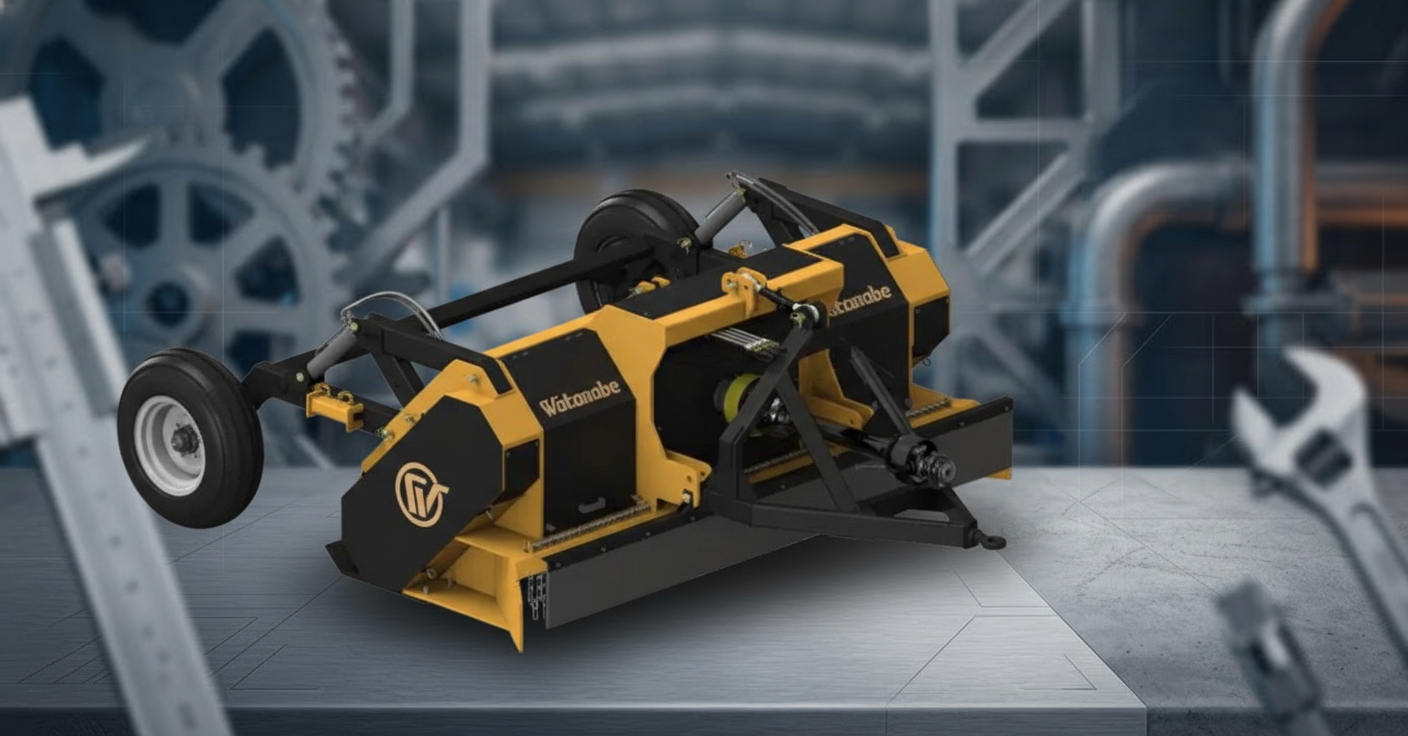
Watanabe Stone Crusher Thor 3.0
The Thor 3.0 is Watanabe’s high-capacity tractor-mounted stone crusher, purpose-engineered for construction and road building aggregate production. With a 3000mm working width and heavy-duty rotor configuration, the Thor 3.0 handles limestone, granite, basalt, and recycled concrete at throughputs suited to road base and railway ballast production programmes. Standard PTO connection to tractors from 120HP. Screen sets from 10–50mm allow rapid product specification changes between base course, sub-base, and drainage aggregate grades. Australian after-sales support from Condell Park NSW.