
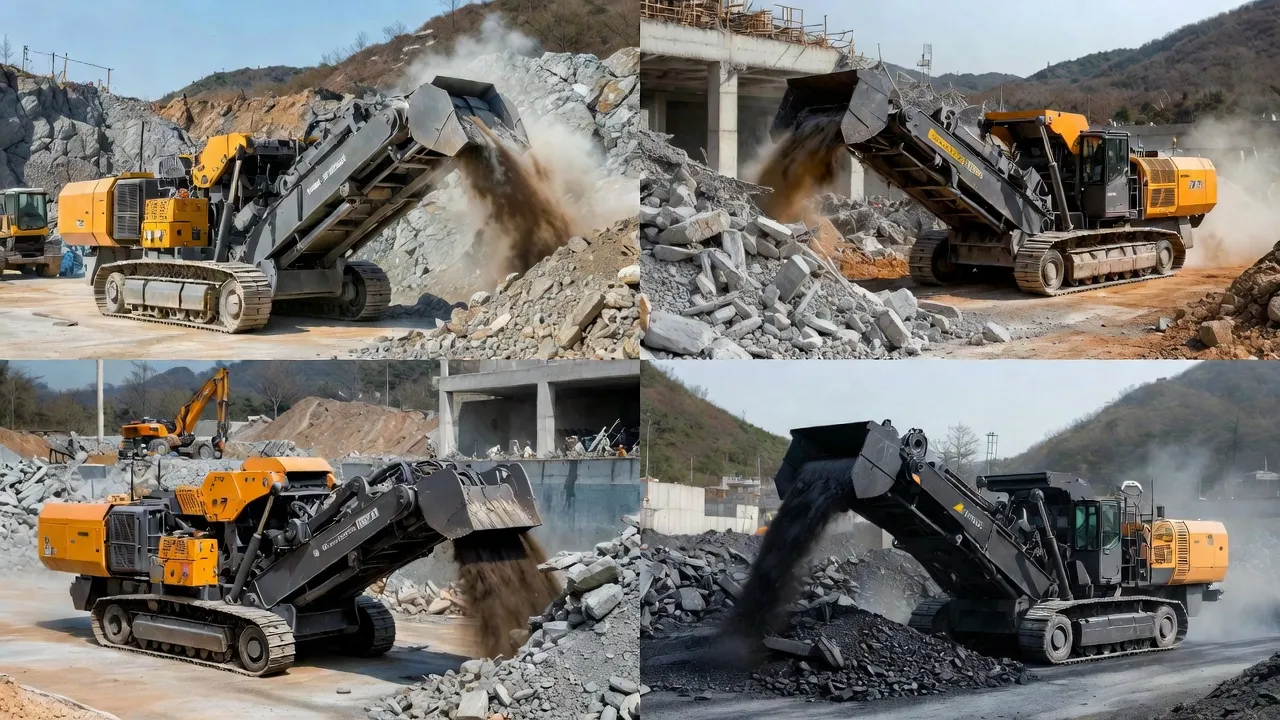
Infrastructure Aggregate Demand: Why Railway and Port Construction Drives Crushing Innovation
Railway and port construction are among the largest single-project consumers of crushed rock aggregate in the Australian civil engineering industry. A single kilometre of new heavy-haul railway line requires approximately 1,500–2,200 tonnes of specification-grade ballast stone in addition to significant volumes of sub-ballast, formation capping, and drainage aggregate. A major port berth construction project consumes tens of thousands of tonnes of rock across rock armour, filter stone, bedding aggregate, and reclamation fill applications. The sheer volume of aggregate demand in these project types creates substantial incentive to explore on-site or near-site crushing as an alternative to quarry supply — particularly for projects in regional or remote locations where the combination of quarry distance, aggregate specification, and project programme creates logistics and cost challenges that a mobile stone crusher can directly address.
Australian infrastructure programmes scheduled for delivery over the next decade — including major inland rail projects, port capacity expansions in Queensland and WA, and regional freight rail upgrades — will create sustained aggregate demand across locations where conventional quarry supply chains face significant logistical constraints. Contractors who deploy mobile stone crusher capability ahead of or alongside their construction programmes can establish aggregate supply cost advantages that improve project margin on aggregate-intensive items of work — advantages that compound significantly across multi-year construction programmes.
Railway Ballast Production: Meeting ARTC and State Rail Specifications
What Railway Ballast Specification Actually Requires
Railway ballast is among the most rigorously specified aggregate products in Australian civil construction. The Australian Rail Track Corporation (ARTC) specification TMC 222, along with state rail authority equivalents for Queensland Rail, Sydney Trains infrastructure, VicTrack, and the WA Mainline, prescribes tight requirements across multiple quality dimensions: particle size distribution (typically 25–53mm with no more than 5% passing 19mm and no more than 5% retained on 63mm); Los Angeles abrasion value (LAA ≤ 25% for heavy haul, ≤ 30% for general freight and passenger); aggregate crushing value (ACV ≤ 26%); sodium sulfate soundness (≤ 3% after 5 cycles); flakiness index (≤ 35%); and shape coefficient requirements that preferentially favour angular, blocky particles over thin, flaky, or elongated shapes. These are not aspirational targets — they are minimum pass/fail thresholds against which each production batch is tested, with non-conforming material rejected regardless of the project schedule pressure.
Crusher Configuration for Ballast-Grade Output
Producing ballast that meets ARTC specification requires careful crusher configuration decisions that reflect the interaction between source rock properties and the specific quality parameters being targeted. The most critical single configuration decision is rotor tip speed: higher tip speeds produce more angular particles (preferred for ballast flakiness index compliance) but also generate higher fines content (which drives up the percentage passing 19mm and risks breaching the 5% lower size limit). The optimal tip speed for ballast production is source-rock specific — harder rocks can tolerate higher speeds without excessive fines generation; softer rocks require lower speeds and may be limited to meeting the LAA and ACV requirements rather than the shape requirements in certain geological formations. Watanabe’s variable-speed configurations allow this source-rock-specific optimisation, providing a material advantage over fixed-speed equipment in achieving consistent ballast specification compliance across variable source rock conditions.
Particle Size (ARTC)
25–53mm target fraction. Max 5% passing 19mm. Max 5% retained on 63mm. Screen grate at 53mm with secondary 19mm scalping screen to remove fines fraction after crushing. Tight aperture tolerance critical.
Strength (LAA ≤ 25%)
Only hard rock types (granite, basalt, diorite, hard quartzite) consistently meet heavy haul LAA requirements. Source rock strength testing before crushing programme commitment is mandatory for ARTC ballast supply.
Shape (FI ≤ 35%)
Angular, blocky particles preferred. Watanabe impact crusher geometry inherently produces angular fracture surfaces. Rotor speed tuning critical: too high generates fines; too low produces sub-angular particles that tend toward flaky shapes.
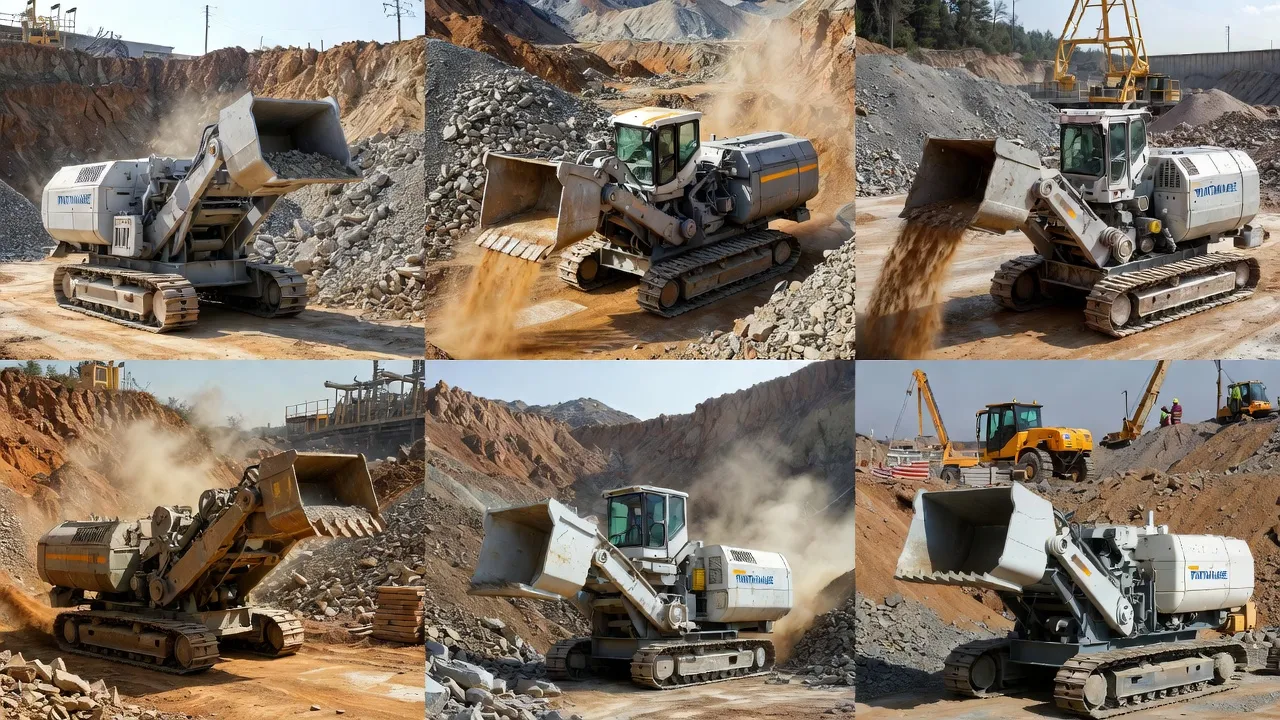
On-Corridor Ballast Production: The Economics of Moving the Crusher to the Source
The conventional approach to railway ballast supply — purchasing from a quarry with ARTC product certification and trucking to the rail corridor — is well-established and works effectively for lines close to existing certified quarry sources. For regional and remote rail extensions, however, this approach imposes a transport cost premium that grows with every kilometre of corridor distance from the quarry gate. Australian Bureau of Statistics freight rate data consistently shows that land freight for crushed rock exceeds $0.08–$0.12 per tonne-kilometre for bulk road freight in regional areas, meaning that a quarry 300km from the closest point on a remote rail corridor adds $24–$36 per tonne in transport cost alone — before the quarry gate price is added. Against an in-situ rock crushing cost of $12–$18 per tonne for on-corridor production, the arithmetic of local crushing is compelling for any rail project extending more than 80–100km from an approved ballast quarry.
The critical path for establishing on-corridor ballast production begins with source rock qualification — confirming that the geological formation accessible within the rail corridor meets the rock strength and shape requirements of the applicable ballast specification before any crushing investment or programme commitment is made. Suitable hard rock formations (granite, basalt, dolerite, hornfels) occur along numerous Australian rail project corridors, and the investment in a source rock assessment programme — typically consisting of hammer Schmidt rebound testing, LAA testing of rock from representative sampling, and bulk sample crushing trials — pays for itself if it confirms viability before the crushing programme is committed.
On-Corridor Ballast Production — Qualification to Delivery Flow
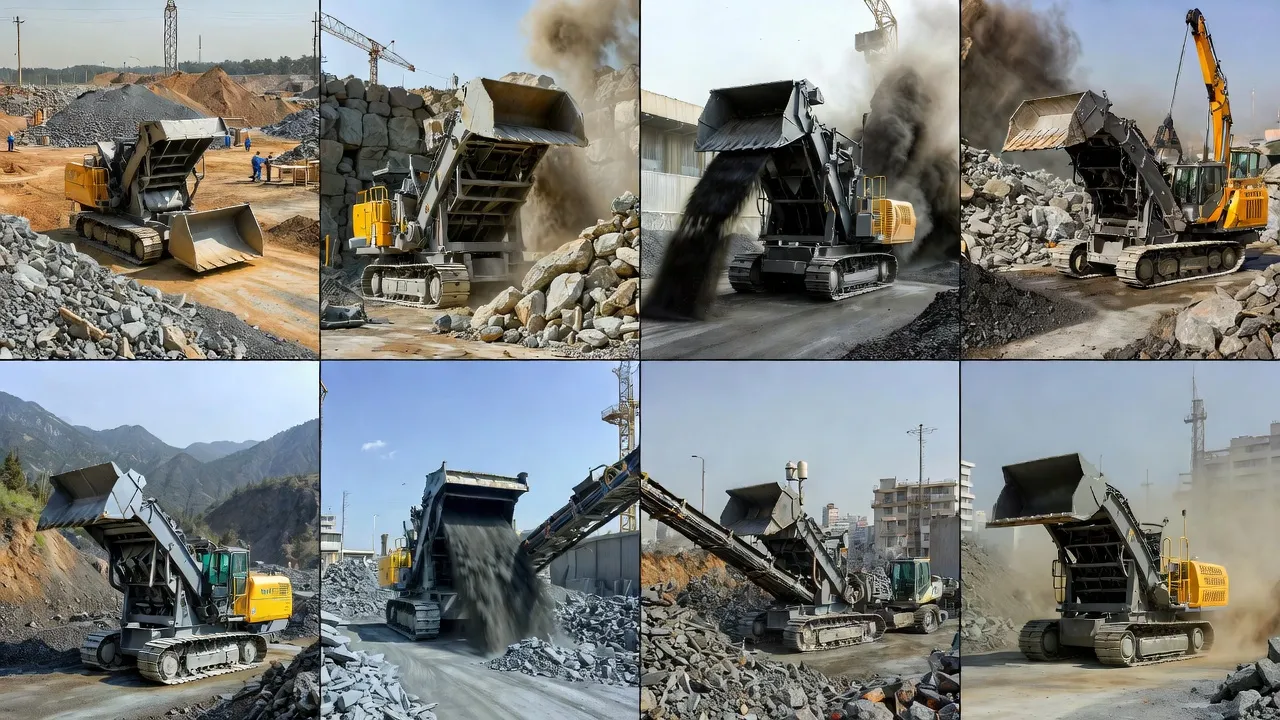
Port Construction Aggregate: Rock Armour, Filter Stone, and Reclamation Fill
Rock Armour Filter Layer and Bedding Aggregate
Port construction and coastal protection works place broken rock materials in layered cross-sections where each layer serves a specific structural and hydraulic function. The armour layer (the outermost, wave-absorbing layer) uses large quarried rock placed individually to withstand storm wave forces. Beneath the armour, filter layers and bedding layers use progressively finer crushed rock that prevents loss of finer materials through the armour voids while maintaining hydraulic permeability for wave energy dissipation. The filter stone specification typically falls in the 20–200mm range depending on the armour stone size above it, and this coarser, less tightly specified product is where on-site crushing with a mobile stone crusher is most viable — the specification tolerance is wide enough to accommodate the product variability inherent in mobile crushing, and the volume requirements are large enough to make on-site production cost-effective.
Reclamation Fill Processing for Port Land Formation
Port land reclamation — the construction of new land area behind completed seawall structures — consumes enormous volumes of fill material that accepts broad specification tolerance as long as the material is competent, free of organic contamination, and capable of achieving the required density under compaction. Rock excavated during dredging or harbour deepening works, quarried material from adjacent headlands, and waste rock from port access road construction can all be processed through a stone crusher to reduce bulk and improve compactability before placement as reclamation fill. The key processing benefit is not size reduction per se but volume reduction and consistency: irregular boulders that cannot be effectively compacted are reduced to consistently graded material that achieves the specified compaction density in fewer passes, reducing roller time and accelerating the reclamation schedule.
Sub-Ballast and Formation Capping: The Aggregate Layers Beneath the Ballast
The railway track structure extends well below the visible ballast layer. Beneath the ballast lies a sub-ballast layer (typically 150–300mm of well-graded crushed rock in the 0–20mm range) that provides drainage and separates the ballast from the formation capping below it. Beneath the sub-ballast, the formation capping layer (typically 0–100mm crushed rock or selected gravel) provides a stable working surface during construction and long-term structural support for the track loading above. These two sub-surface layers together require aggregate volumes that can exceed the ballast volume on weak formation tracks, and both accept considerably broader specification tolerance than the ballast layer — making on-site mobile crushing an even more straightforward production option for sub-surface aggregate than for ballast itself.
A rock crusher for sale in Australia configured for sub-ballast production typically runs at a screen aperture of 20–25mm, producing a well-graded 0–20mm product that achieves the drainage and structural separation functions of sub-ballast without the tight strength and shape requirements imposed on the ballast layer above. Local rock types that cannot meet ballast specification (certain weathered igneous rocks, competent but lower-strength sandstones) may well meet sub-ballast specification and can be productively used for the sub-surface layers while imported or corridor-produced hard rock is reserved for the ballast layer — a material allocation strategy that minimises the volume of premium ballast required without compromising track structural performance.
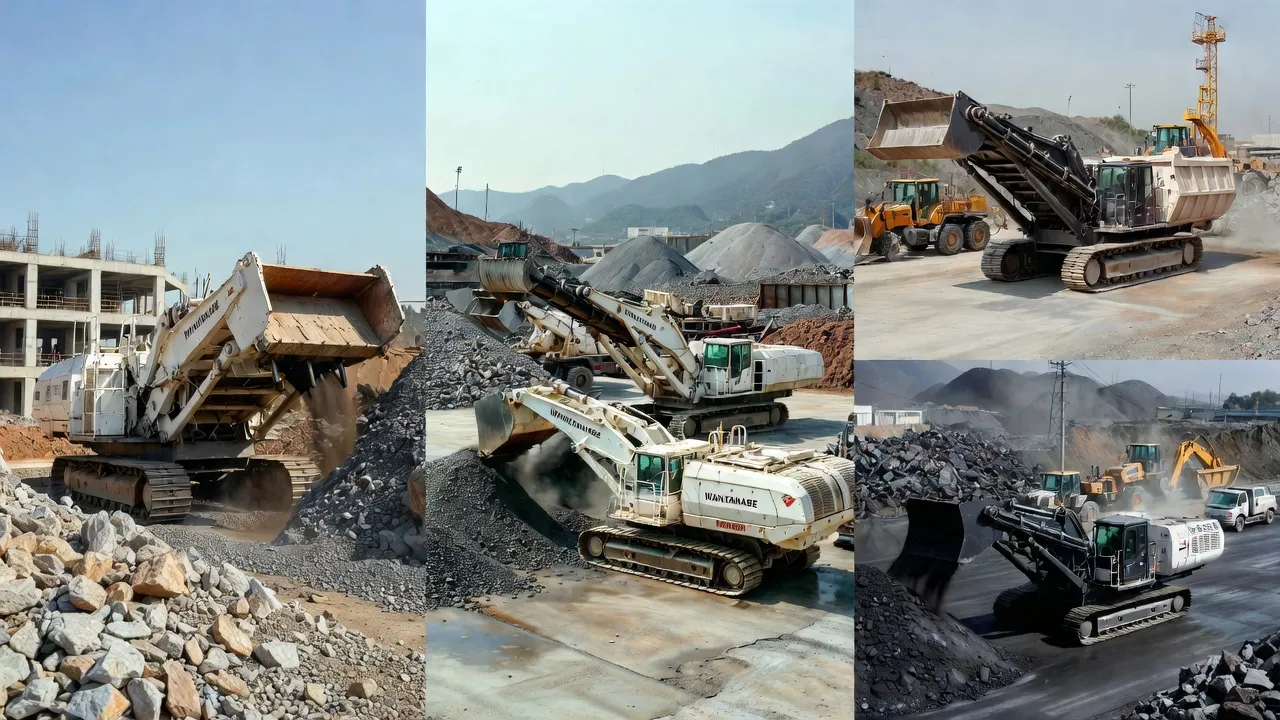
Port Breakwater and Causeway Construction: High-Volume Aggregate Programmes
Port breakwater and causeway construction generate among the highest aggregate volumes of any single civil engineering structure type — a major port breakwater extension consumes hundreds of thousands of tonnes of rock across armour, filter, and core fill layers. The core fill material, which forms the internal mass of the breakwater structure, uses the largest volume at the broadest specification tolerance: typically 0–300mm or 0–500mm run-of-quarry material that provides the bulk mass required for hydraulic stability without the strength and shape requirements imposed on the armour layer. Where rock outcrops are available within barge or haul distance of the breakwater construction front, a tractor-mounted stone crusher can process this material to a consistent maximum size that improves placement efficiency and eliminates the oversize handling problems that fully unprocessed run-of-quarry rock creates during underwater placement by marine plant.
Port causeway construction — building the road and service connections that link a port facility to the road network across estuarine or tidal flat terrain — requires road base aggregate delivered to a linear construction front that advances continuously as the causeway extends. The logistics model for causeway road base supply is directly comparable to railway construction: the construction front advances faster than the quarry supply chain can follow economically over long haul distances, making on-site or near-site mobile crushing the cost-optimal supply strategy for road base on causeway projects beyond 80–100km from an accessible quarry.
QA Management for Railway and Port Crushing Programmes
Railway and port construction operate under quality management regimes that are substantially more rigorous than standard road construction or building works, reflecting the long service life of the infrastructure and the safety consequences of structural failure. The ARTC and port authority quality management requirements for aggregate products include: pre-production source approval testing; lot-based production testing with defined lot sizes (typically 1,000–5,000 tonnes); hold-point inspections before product placement; and non-conformance management procedures that dictate the testing and approval pathway for any batch that initially fails specification tests. Operating a crusher programme under these requirements demands a production quality management system — not just a crusher and a sieve.
Watanabe supports railway and port ballast production programmes with configuration documentation, production settings records, and crusher performance data that integrate directly with project quality management plans. The practical implication is that when a non-conformance event occurs — a batch that is initially out of specification on flakiness index, for example — the production records enable rapid root cause investigation (was it a change in feed rock? a worn screen grate? a rotor speed deviation?) rather than a time-consuming and disruptive forensic investigation of an undocumented production process. This production traceability is not an administrative nicety in railway and port construction — it is a mandatory quality management requirement that operators who work with Watanabe’s documentation framework are positioned to meet efficiently.
Environmental Management for Infrastructure Crushing in Sensitive Coastal and Inland Environments
Railway and port construction projects in Australia frequently traverse or occur adjacent to environmentally sensitive areas — coastal wetlands, endangered ecological communities along rail corridors, and marine habitats affected by port development. Crushing operations within or adjacent to these areas must be managed in compliance with project-specific Environmental Management Plans (EMPs) that are typically far more prescriptive than those for general construction sites. For coastal port projects, the key environmental risks from crushing operations are dust generation that can affect intertidal vegetation, and stormwater carrying fine sediment into marine environments. For rail corridor projects through inland vegetation communities, dust impacts on adjacent native vegetation are the primary regulatory concern.
Watanabe’s dust suppression specifications — providing documented water application rates and coverage zones at feed, crushing chamber, and discharge points — give project environmental managers the data they need to assess whether the crusher operation meets the EMP dust control requirements for sensitive site contexts, and to design supplementary dust control measures (additional water trucks, wind breaks, enclosure panels) where the standard crusher configuration requires augmentation. This transparent technical specification is essential for project environmental teams working under conditions where regulatory non-compliance creates programme delays and approval risk far more costly than any supplementary dust control measure.
Why Major Infrastructure Contractors Choose Watanabe for Railway and Port Projects
Infrastructure contractors working on major Australian railway and port projects choose Watanabe because the combination of technical capability, documentation support, and Australian local supply chain reliability directly reduces the execution risk of on-corridor aggregate production programmes. When a ballast production programme is on a project’s critical path — where production delays translate directly into track installation delays, which translate into programme milestone risk and potential liquidated damages exposure — the crusher must perform to committed throughput and quality targets every shift. Equipment that fails to achieve throughput targets or produces out-of-specification product under production pressure is not merely an operating cost problem: it is a commercial and contractual risk that can affect project profitability far beyond the cost of the equipment itself.
Watanabe’s technical sales team works with infrastructure contractors at the pre-tender stage to develop production programme assumptions, confirm source rock suitability for the intended specification, and provide throughput and quality performance data that supports confident programme planning. This pre-tender technical engagement distinguishes Watanabe from equipment suppliers who provide specifications but offer no support for the production planning process that determines whether those specifications can be reliably achieved in the specific project context. Contact Watanabe’s technical team at [email protected] well before tender submission to allow adequate time for source rock assessment and production programme development.
Featured Product for Railway and Port Construction
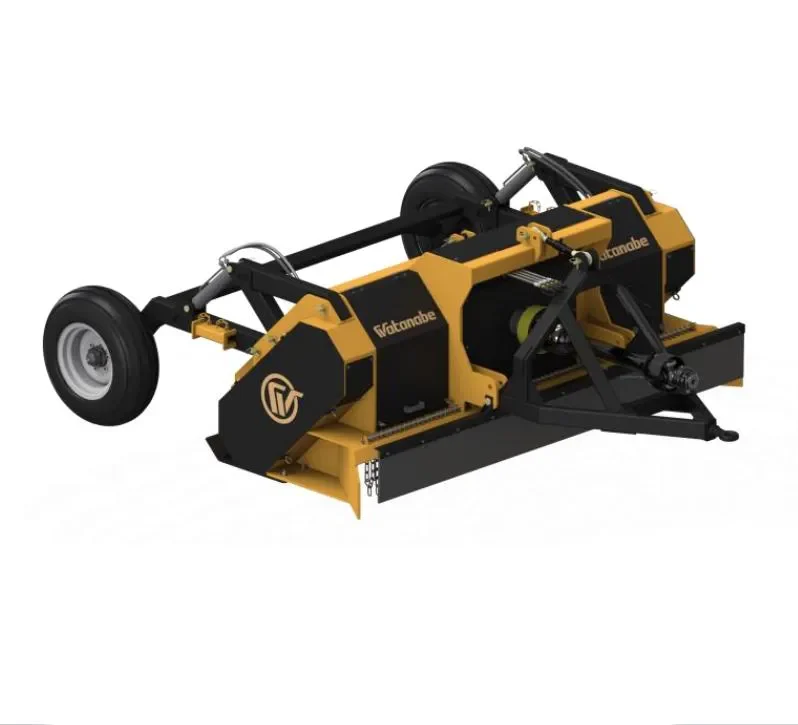
Watanabe Stone Crusher Thor 2.4 Kit Drawbar
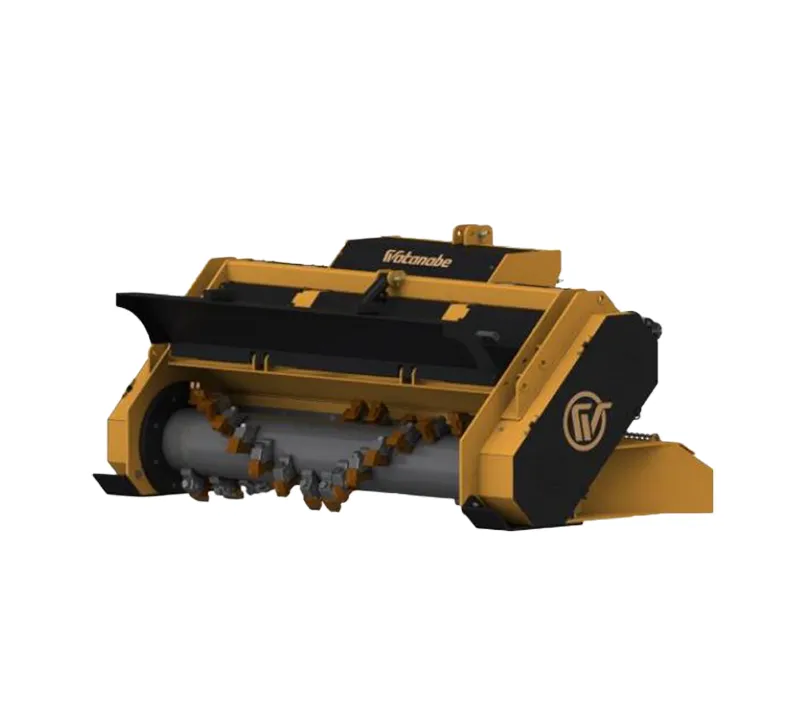
The Thor 2.4 Kit Drawbar is Watanabe’s precision-configured tractor-mounted stone crusher for infrastructure applications demanding consistent product specification — including railway ballast, sub-ballast, port filter stone, and causeway road base production. The drawbar connection provides enhanced stability and positioning flexibility on the steep and uneven terrain typical of rail corridor and port construction sites. Screen grate sets manufactured to tight dimensional tolerances (±1mm on aperture) ensure that product size distribution remains within specification band across the full production run. Available for basalt, granite, dolerite, and hard limestone source rocks in ballast-grade configurations confirmed by trial crushing and NATA lab testing. Tractor requirement from 100HP PTO. Australian parts support from Condell Park NSW with programme stock arrangements available for major infrastructure projects.