
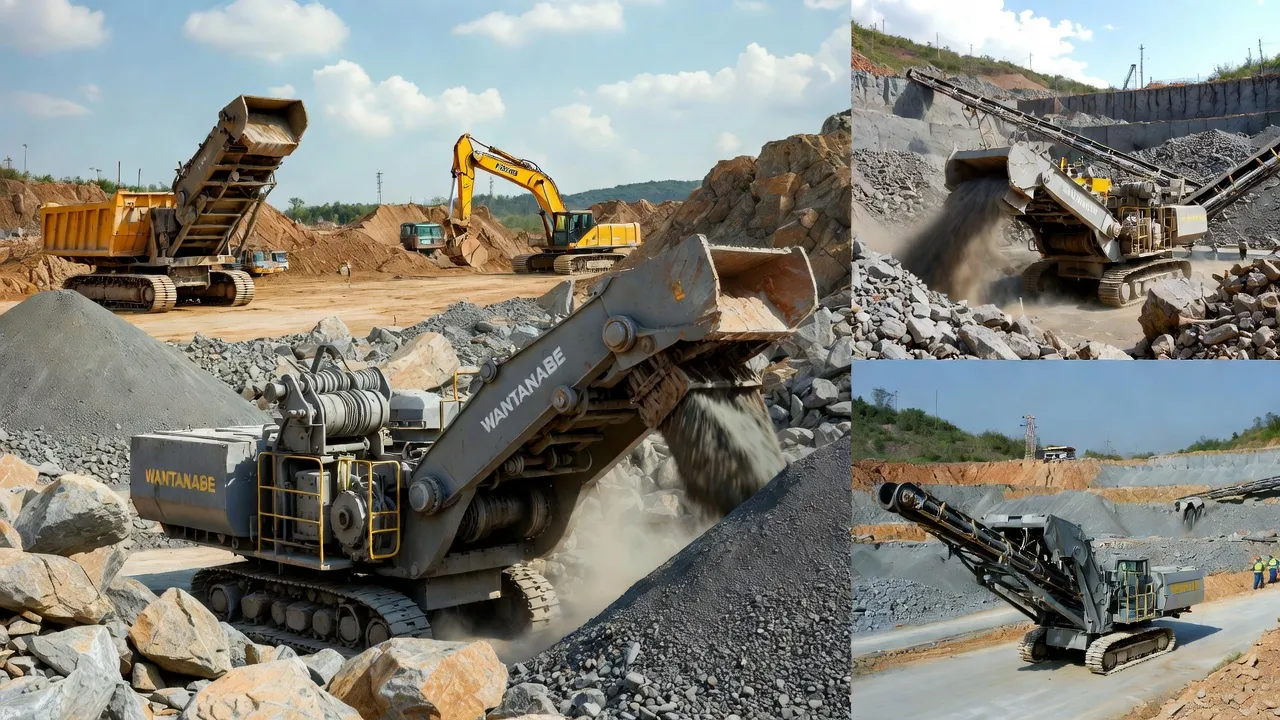
The Critical Role of Ore Crushing in Metallurgical Process Efficiency
Ore preparation — the reduction of run-of-mine rock to a size and form suitable for smelting or hydrometallurgical treatment — sits at the beginning of every metals production process and determines the efficiency of every downstream stage. Crushing and grinding together typically account for 30–50% of total energy consumption in a conventional ore processing circuit, making the selection of appropriate crushing equipment one of the most consequential engineering decisions in metallurgical plant design. A stone crusher machine that achieves a given reduction ratio at lower specific energy consumption than an alternative design is not merely a capital cost consideration — it is a production cost advantage that compounds across every tonne of ore processed over the plant’s operating life.
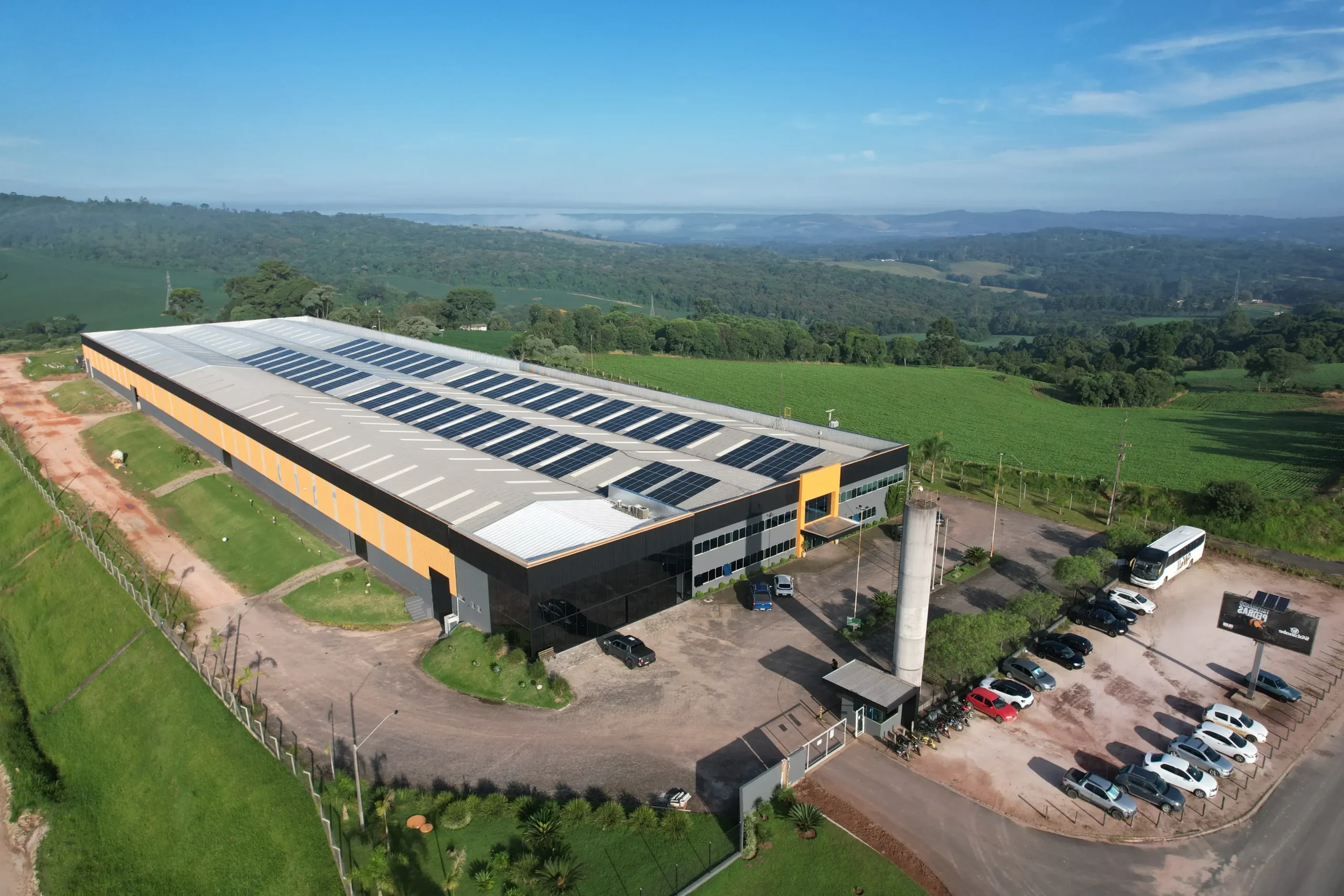
For Australian metallurgical operations, the additional consideration of remote site logistics amplifies the importance of equipment reliability and parts availability. A broken crusher in a remote WA iron ore or QLD copper concentration circuit cannot wait three weeks for an overseas replacement component without significant production loss. Watanabe’s manufacturing approach — with locally stocked wearing components at Condell Park NSW — directly addresses this supply chain vulnerability, ensuring that planned and unplanned maintenance events do not translate into extended production stoppages that undermine plant economics and sales commitments.
Iron Ore Crushing: From Run-of-Mine to Blast Furnace Feed
Primary Crushing Requirements for Iron Ore Processing
Iron ore primary crushing must reduce run-of-mine material (which can arrive at the crusher at 800–1200mm in dense hematite formations) to a consistent product suitable for conveyor transport to secondary processing. For direct shipping ore (DSO) operations that upgrade through screening and washing rather than grinding, the primary crusher output specification is typically 0–100mm, with the proportion of fines (sub-6mm) minimised because fine iron ore is more difficult to handle, creates dust management challenges, and may attract a price penalty in sinter-grade specifications. Watanabe heavy-duty configurations achieve this output specification efficiently for medium-scale iron ore deposits — those producing 0.5–5 Mtpa that are too small to justify purpose-built mineral processing infrastructure but large enough to require serious primary crushing capacity.
Magnetite Ore vs Hematite: Different Crusher Demands
Australia’s iron ore industry processes two fundamentally different ore types that impose quite different demands on crushing equipment. Direct-shipping hematite (Fe₂O₃), the dominant ore type from Pilbara operations, is relatively soft at Mohs 5–6 but occurs in extremely large, dense formations with abrasive gangue minerals including quartzite and shale. Magnetite (Fe₃O₄), which requires beneficiation grinding to ultra-fine sizes (below 45 microns) before magnetic separation, presents a different challenge: the ore itself is harder than hematite but must be reduced to very fine sizes that demand high specific energy input and cause rapid wear on fine crushing and grinding components. Watanabe’s hammer alloy options are matched to these different wear environments, with standard chrome-manganese configurations for DSO hematite primary crushing and harder, more wear-resistant alloy options for magnetite applications where silica gangue abrasivity is the dominant wear mechanism.
Copper Ore Processing: Liberation Crushing for Sulphide and Oxide Ore Types
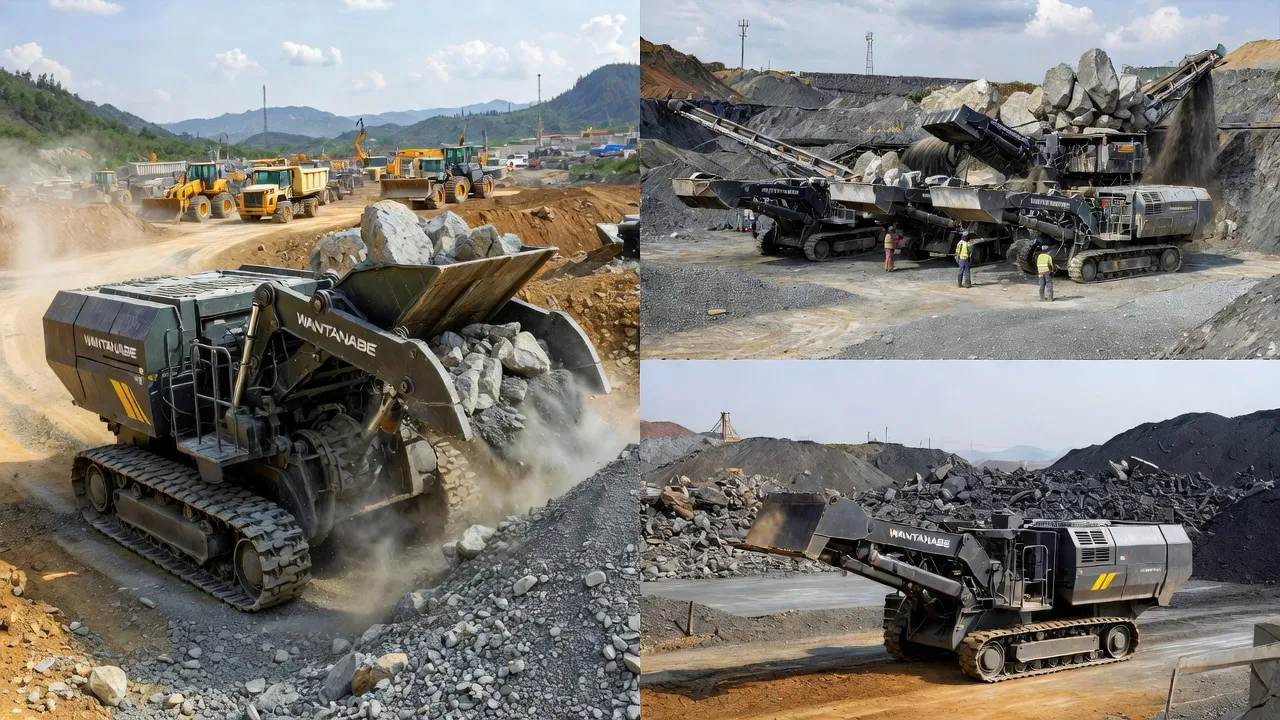
Copper ore primary crushing requirements vary significantly between the two major ore deposit types found in Australian operations: sulphide copper ores (chalcopyrite, bornite, covellite) that are processed through froth flotation concentration; and oxide copper ores (malachite, azurite, chrysocolla) that are typically processed through heap leach with solvent extraction and electrowinning (SX-EW). Sulphide ore crushing targets a P80 of 10–15mm for rod mill feed or 6–10mm for SAG mill feed, requiring multiple crushing stages to reduce from run-of-mine to final mill feed size. Oxide ore for heap leach is crushed more coarsely — typically P80 of 50–75mm — because solution percolation through the heap requires adequate void space that a very fine crush would collapse.
For junior and mid-tier copper producers processing 100,000–2 Mtpa of ore, the tractor-mounted stone crusher provides a primary crushing option with a capital cost structure that aligns with the scale of the operation and the financing constraints of pre-revenue development projects. A single Watanabe PSW-3200 unit can process copper ore at 80–150 t/h in primary configuration — sufficient to support a 500,000 tpa heap leach operation in a two-shift crushing schedule, without the $3–8 million capital outlay required for a fixed jaw-and-cone primary crushing circuit of equivalent throughput.
Blast Furnace Charge Preparation: Sizing Coke, Sinter, and Flux Materials
The Precision of Blast Furnace Burden Sizing
Blast furnace ironmaking is among the most specification-sensitive metallurgical processes in terms of raw material size requirements. The permeability of the furnace burden — the packed bed of iron ore, coke, and flux (typically limestone and dolomite) charged from the furnace top — is critical to maintaining stable gas distribution, uniform reduction, and consistent hot metal tapping temperatures. Burden materials must fall within narrow particle size ranges: typically 10–40mm for sinter feed, 25–75mm for coke, and 10–40mm for limestone flux. Material that falls outside these ranges causes permeability disturbances that can destabilise furnace operation, reduce throughput, and in severe cases require a costly furnace hang-and-slip event to recover normal gas flow distribution.
Limestone Flux Preparation with a Stone Crusher Machine
Limestone and dolomite for blast furnace flux must be crushed to specification size and screened to remove both oversize (which reduces flux reactivity in the furnace) and fines (which block burden permeability and are carried out with top gas). A stone crusher machine configured for limestone flux preparation typically runs at medium rotor speed with 20–40mm screen aperture selection and includes a fine-fraction recirculation system to ensure the product remains within the specified 10–40mm size window without excess sub-10mm material. Watanabe’s screen grate sets are manufactured to dimensional tolerances that maintain the upper size limit consistently — preventing oversize limestone from reaching the furnace charge system and avoiding the operational consequences of out-of-specification burden material.
Aluminium Production: Bauxite Crushing and Alumina Refinery Feed Preparation
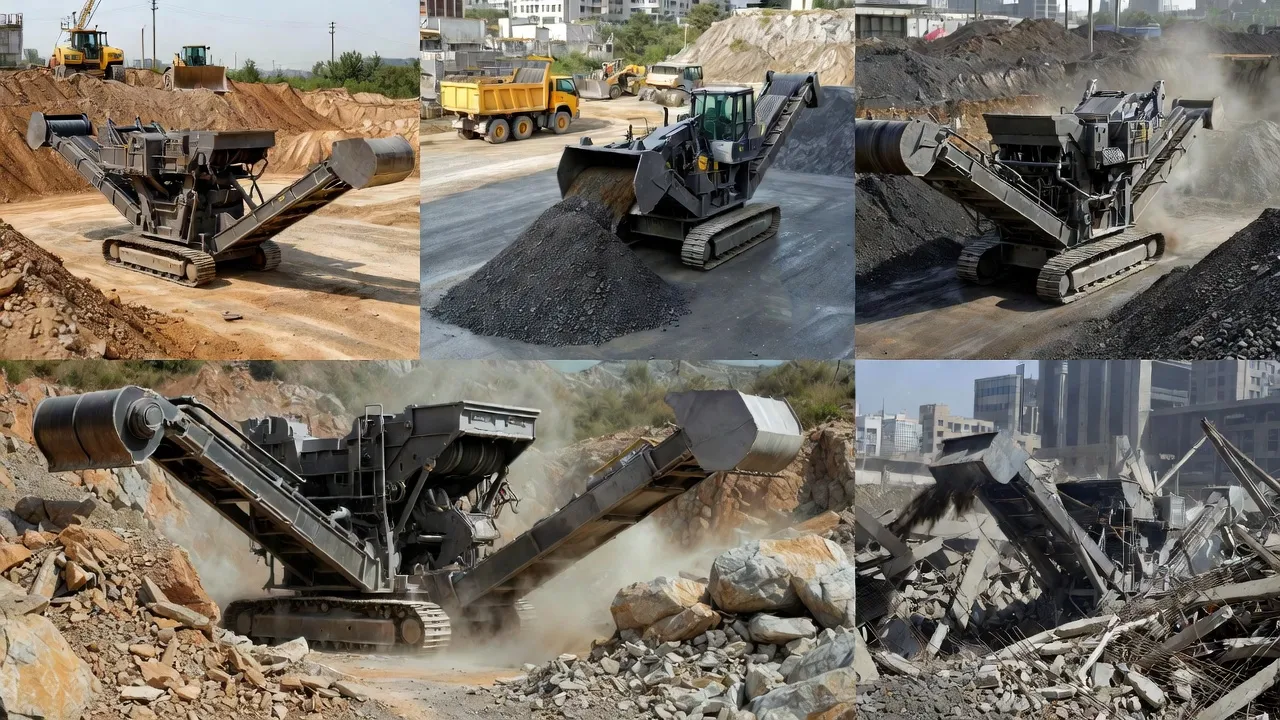
Australia produces approximately 30% of the world’s bauxite — the primary ore for aluminium production — with major operations in WA (Darling Range), QLD (Weipa), and NT (Gove). The Bayer process used to refine bauxite to alumina requires the ore to be ground to fine particle sizes (typically below 150 microns) for efficient caustic soda dissolution, but this grinding step is far more energy-efficient when preceded by primary crushing that reduces run-of-mine bauxite to a consistent 25–50mm feed fraction. Without primary crushing, the grinding mills must handle the full size range from millimetre dust to 300mm boulders simultaneously — creating wildly inefficient operating conditions that inflate specific energy consumption well above design levels.
Bauxite crushing presents specific material handling challenges related to the ore’s tendency to contain sticky clay fractions — gibbsite bauxite from the Darling Range in particular is frequently associated with clay-rich overburden that does not fully separate during mining. Clay-contaminated bauxite feed to a stone crusher causes screen grate blinding, reducing throughput and requiring frequent manual clearing. Watanabe addresses this through pre-screening arrangements that divert the clay fraction away from the crusher feed, and through screen aperture selection (typically 50mm+ for high-clay Darling Range bauxite) that maintains throughput at the cost of a somewhat coarser product — a tradeoff that the downstream grinding circuit absorbs without process penalty.
Bauxite to Alumina — Where Stone Crusher Fits in the Bayer Circuit
Mining
Open-pit excavation of bauxite ore. ROM material at 0–400mm irregular lump size delivered to primary crusher receiving hopper.
Primary Crushing ← Stone Crusher
Watanabe stone crusher reduces ROM bauxite to 25–50mm consistent product. Pre-screen removes clay fraction. Output feeds slurry preparation tank.
Grinding
Rod or ball mills reduce crushed bauxite to sub-150μm with addition of caustic soda solution. Consistent crusher output reduces specific grinding energy significantly.
Digestion & Clarification
Aluminium hydroxide dissolved from bauxite slurry under temperature and pressure. Red mud waste separated by clarification and thickening stages.
Ferroalloy and Specialty Metal Ore Processing
Manganese Ore Crushing for Ferromanganese Production
Australia holds approximately one-third of the world’s known manganese resources, primarily in the Groote Eylandt deposit in the NT and the Pilbara region of WA. Manganese ore for ferromanganese smelter feed must meet size specifications in the 10–50mm range for submerged arc furnace (SAF) charge — coarser than many other ferroalloy furnace feeds because SAF technology requires adequate gas permeability through the burden at high operating temperatures. Manganese ore’s variable hardness (Mohs 5–6 for soft pyrolusite to Mohs 6–7 for hard bixbyite-rich ores) requires flexible crusher hammer configurations, and Watanabe’s adjustable breaker plate gap system allows operators to tune the target output size when product specification shifts between high-grade and low-grade ore processing campaigns on the same circuit.
Chromite and Nickel Laterite: High-Abrasion Ore Challenges
Chromite ore from WA deposits is one of the most abrasive materials processed in Australian metallurgical operations — chrome spinel minerals (Mohs 7.5–8) combined with highly siliceous host rock create a combined abrasivity that exceeds most natural rock types processed by standard crushers. Watanabe’s highest-grade alloy hammer set (heat-treated high-chrome iron, 62–65 HRC) is required for chromite processing, with expected hammer life of 80–120 hours between replacement versus 200–300 hours for softer metallic ore applications. Nickel laterite ore from WA deposits presents a very different challenge: the ore is soft at Mohs 2–3 (dominated by clay-like serpentine and smectite minerals) but extremely sticky when wet, requiring careful feed moisture management and anti-pack screen configurations to prevent chamber blockages during humid or wet season production.
Scrap Metal Processing: Liberating Recyclable Metal from Composite Waste
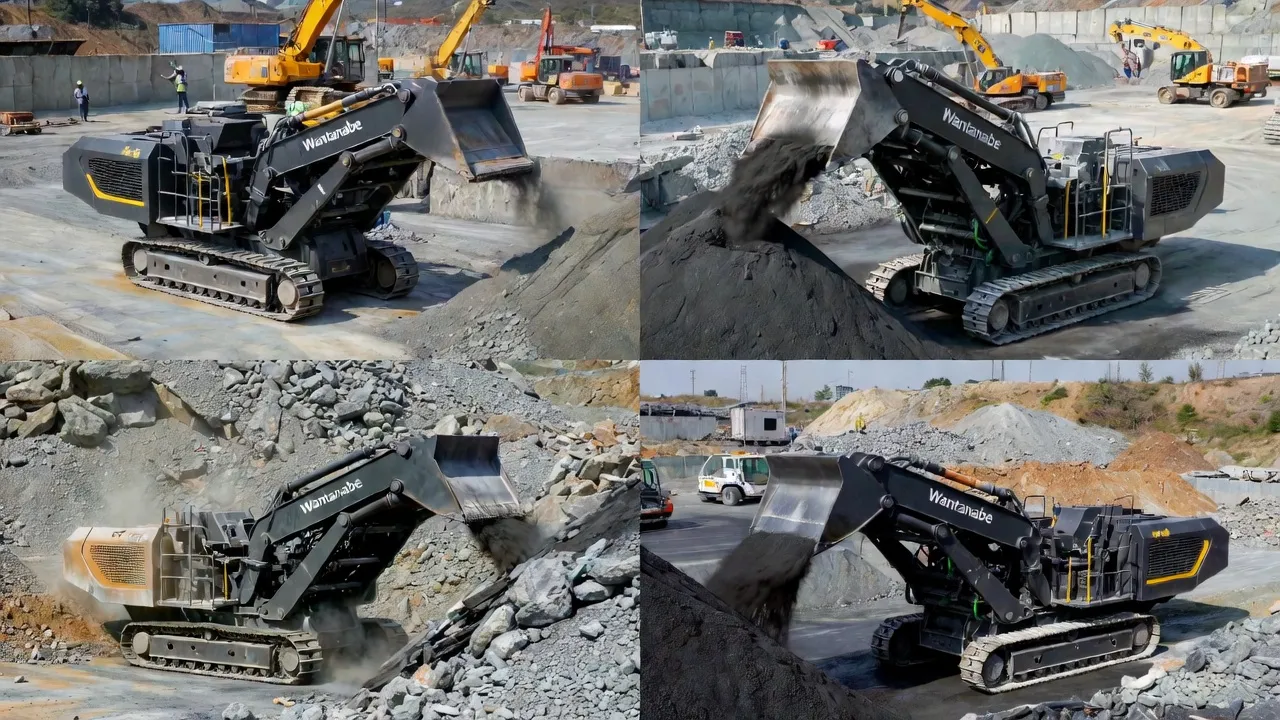
Metallurgical recycling operations increasingly process composite scrap materials where the target metal is bonded to or encapsulated within non-metallic matrices — old refractories with embedded metallic particles, spent catalyst carriers with platinum group metal loading, wire harness assemblies with copper conductors in plastic insulation, and slag materials with metallic inclusions. A stone crusher machine used as a liberation device — reducing these composite materials to a particle size at which the metallic and non-metallic phases can be separated by density, magnetic, or electrostatic methods — is an enabling step for secondary metals recovery operations that cannot process the composite feed directly.
The crusher configuration for liberation-focused processing differs from bulk ore reduction: lower throughput rates are typically acceptable because the target is liberation completeness rather than volume throughput, and finer screen apertures (5–15mm) are used to ensure adequate size reduction for downstream separation efficiency. Where the non-metallic matrix material includes ceramic or refractory components — as in spent furnace lining recovery — the high hardness of alumina-rich refractories (Mohs 8–9) imposes extreme demands on hammer metallurgy, and Watanabe’s specialist alloy options for high-hardness applications are essential for viable crusher life in these duty cycles.
Sinter Plant Feed Preparation: Consistency as a Performance Driver
Sinter plants at integrated steel mills consume the fine ore fraction that cannot be charged directly to the blast furnace — typically sub-10mm iron ore fines blended with coke breeze, limestone flux fines, and return fines — and agglomerate this mixture into a permeable, strong product called sinter that is well-suited to blast furnace charging. The sinter plant feed blend must be precisely controlled for particle size, basicity (CaO/SiO₂ ratio), moisture, and permeability to produce sinter meeting blast furnace quality requirements consistently. Each component of the sinter feed blend is sized through a dedicated crushing and screening circuit, and the consistency of particle size distribution from these circuits directly affects sinter quality uniformity and blast furnace performance stability.
For the limestone and dolomite flux components of the sinter blend, a Watanabe stone crusher in Australia configured with 5–10mm screen apertures produces the fine flux fraction required for effective sintering — targeting the 0–6mm range where limestone reactivity during sintering is highest and contributes most effectively to achieving the target basicity and sinter strength. The tight screen aperture tolerances of Watanabe’s grate sets are particularly important in this application: deviation from the target size distribution in the flux component shifts the sinter product basicity outside its control band, affecting the blast furnace’s slag chemistry and potentially destabilising hot metal quality for the downstream steelmaking converter.
Maintenance Engineering for Metallurgical-Duty Stone Crushers
Metallurgical processing environments impose maintenance demands on crusher equipment that differ materially from general construction or agricultural applications. Continuous operation schedules (often 24/7 in integrated plant configurations), abrasive ore feeds, dusty enclosed environments, and integration with upstream and downstream process equipment mean that maintenance cannot simply be performed whenever convenient — it must be integrated with plant-wide scheduled maintenance windows and designed to minimise duration to protect plant utilisation targets. Watanabe’s engineering approach to metallurgical-duty maintenance addresses three key parameters: accessibility (all high-wear components accessible without removing adjacent equipment or breaking process connections), replacement speed (full hammer set replacement completable in under four hours by two trained technicians using standard tools), and predictability (clear wear indicator markings on hammers and screen grates that communicate remaining life without dimensional measurement equipment).
Predictive maintenance practices — specifically vibration monitoring of rotor bearing assemblies and thermal imaging of drive components — are increasingly adopted in metallurgical plant environments because they allow wear condition assessment without shutdown, enabling maintenance decisions to be planned rather than reactive. Watanabe’s rotor assemblies include bearing housing designs compatible with standard vibration monitoring sensor mounting, and the technical team can provide guidance on baseline vibration signatures and alarm threshold setting for condition-monitoring integration into plant SCADA systems — a capability that directly supports the shift from reactive to planned maintenance strategies that metallurgical plant engineers consistently identify as a primary equipment cost reduction lever.
Watanabe’s Technical Capability for Metallurgical Applications in Australia
Australia Watanabe Tractor Stone Crusher Co., Ltd brings a technical depth to metallurgical ore preparation applications that is rarely available from general agricultural crusher manufacturers. The Watanabe technical team understands the distinction between a primary crushing application for DSO iron ore export and a liberation crushing application for secondary copper recovery — and configures equipment accordingly rather than supplying a standard unit and leaving the operator to discover the mismatch after commissioning. This application-specific engineering approach extends to hammer alloy selection (four alloy grades available for different ore abrasivity profiles), screen grate aperture tolerancing (specified to dimensional standards that matter in process quality applications), and integration guidance for connecting the tractor-mounted crusher to plant conveyor systems and process control infrastructure.
For metallurgical procurement engineers comparing tractor-mounted and fixed-plant crushing options, Watanabe provides a comparative technical analysis addressing throughput, product quality, capital cost, operating cost, and parts supply risk for the specific application — a service that enables an evidence-based procurement decision rather than a specification-sheet comparison that inevitably favours the larger numbers in a fixed-plant brochure. Reach the Watanabe technical sales team at tractor-stone-crusher.com/contact-us/ with your ore type, required throughput, and product specification to begin the assessment process.
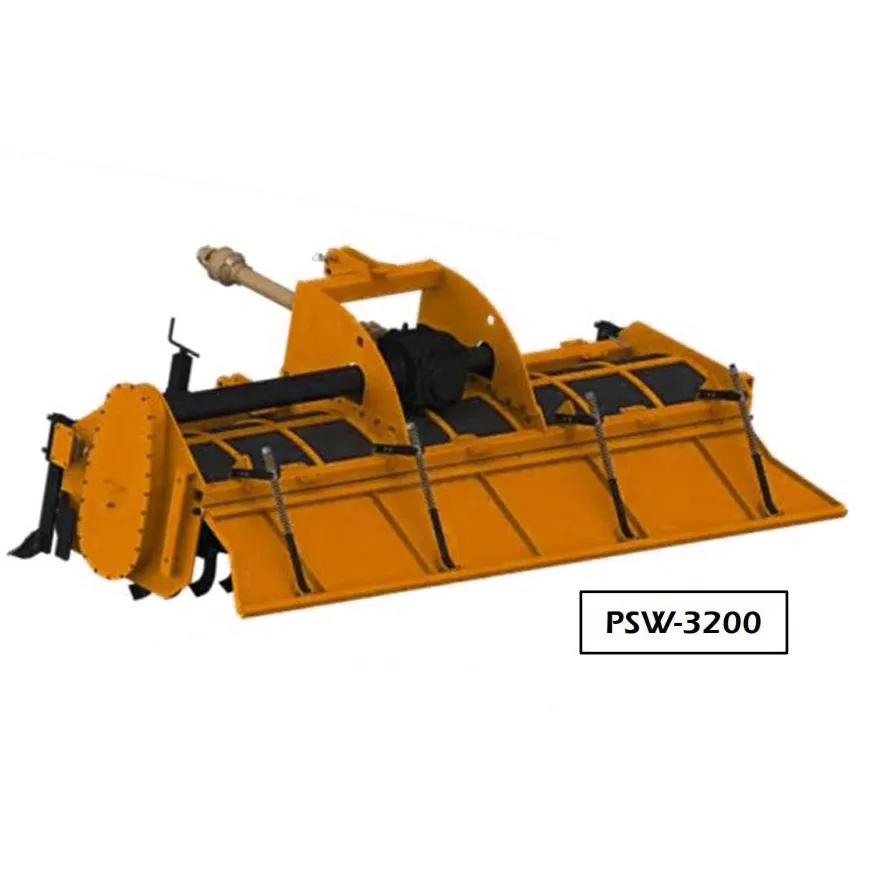
Featured Product for Metallurgical Ore Processing
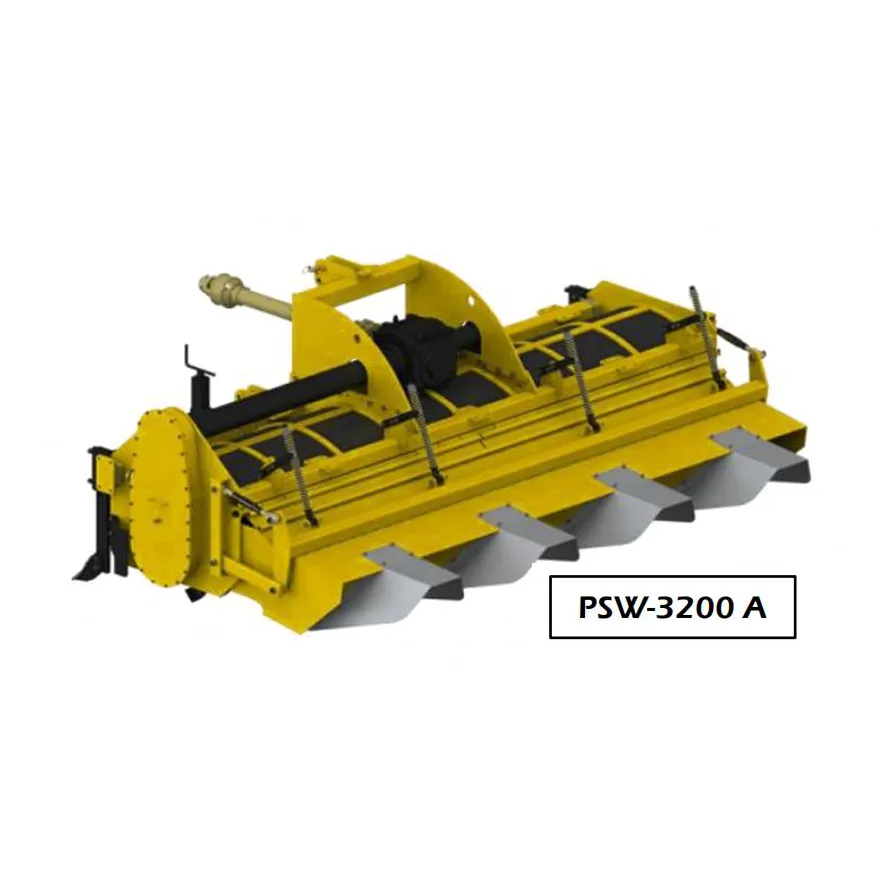
Watanabe PSW-3200 Series Stone Crusher
Watanabe’s PSW-3200 Series is the preferred choice for metallurgical ore preparation applications where continuous-duty performance, consistent product sizing, and parts supply reliability are non-negotiable. The heavy-duty rotor assembly handles iron ore, copper ore, bauxite, manganese ore, and limestone flux at metallurgical quality standards, with hammer alloy options matched to specific ore abrasivity profiles. Screen grate sets from 5–50mm accommodate the full range of metallurgical product size specifications. PTO-driven configuration provides deployment flexibility for remote mine sites without fixed electrical infrastructure. Backed by Watanabe’s Condell Park NSW parts supply network with fast-turnaround availability of all high-wear components.