
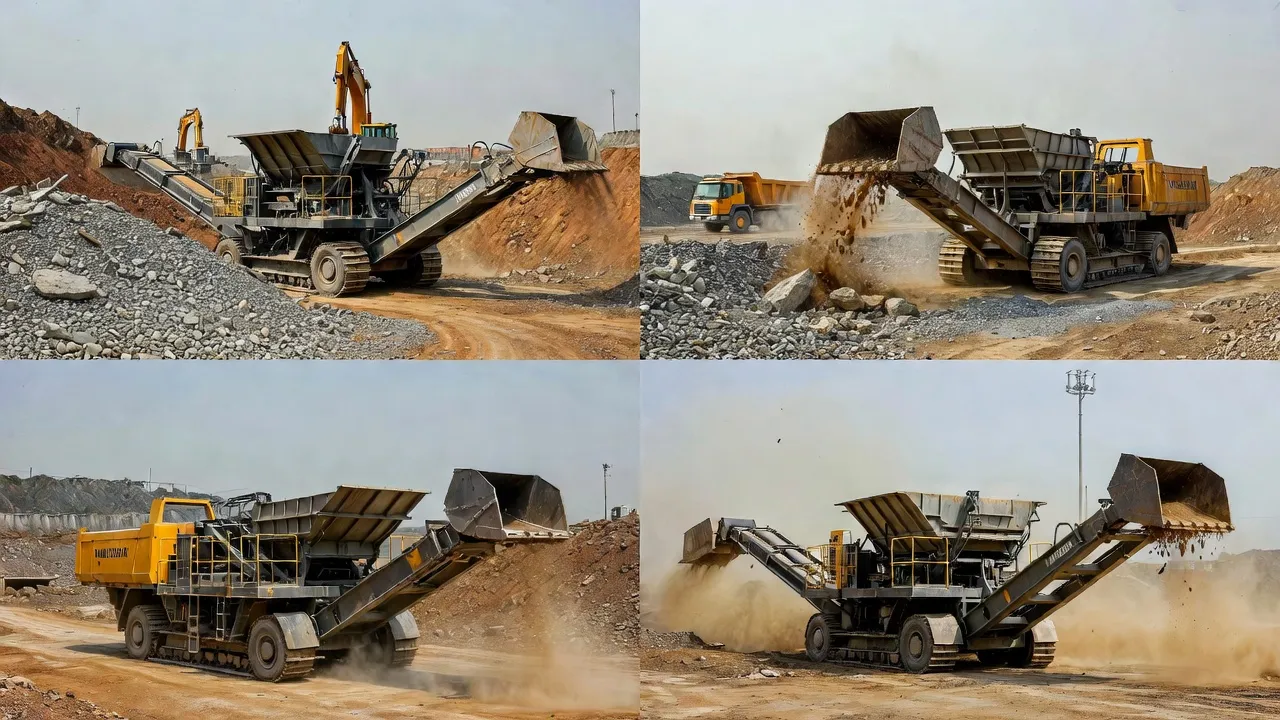
The Case for Mobile Crushing in Small-Scale Mining Operations
The assumption that serious mining demands serious fixed infrastructure is challenged every year by the widening performance envelope of tractor-mounted mobile crushing equipment. Small and junior mining operations in Australia face a capital dilemma that conventional fixed-plant thinking does not resolve: the funding required to build a primary crushing circuit capable of 200–500 t/h often exceeds what is available in a project’s first operational phase, yet producing ore at commercially meaningful rates is necessary to generate the cashflow that finances subsequent development stages. A mobile stone crusher breaks this deadlock — delivering productive primary crushing capacity at a fraction of fixed-plant capital cost, without the civil works, electrical infrastructure, and commissioning lead times that add months and millions to conventional crushing plant installations.
Australia’s mining landscape contains thousands of operations that will never be candidates for purpose-built crushing infrastructure: alluvial gold workings in north Queensland, opal fields across the outback, dimension stone quarries in regional NSW, and small base metal deposits across WA and SA that generate sufficient cashflow for sustained operation but insufficient margin to justify fixed-plant capital expenditure. For these operators, a mobile stone crusher is not a compromise — it is the only economically rational crushing solution available, and Watanabe’s tractor-mounted configurations are engineered to deliver the reliability and throughput that serious production operations demand.
Small Open-Cut Mining: Crushing Directly at the Pit Face
Eliminating the Haul to a Fixed Crusher
In small open-cut operations, haul from the mining face to a fixed processing circuit is one of the largest unit cost components. Where the pit is shallow and working areas compact, this cost is manageable. As the pit deepens or the working face advances, haul distances grow, truck cycle times lengthen, and the number of truck-hours required per tonne of ore produced climbs with every metre of advance. A mobile stone crusher that travels with the working face eliminates this accumulating cost entirely: ore is crushed at or immediately adjacent to the excavation point, and the crushed product — substantially reduced in bulk volume — is transported to the processing circuit at far lower unit cost per tonne than unprocessed run-of-mine material.
Practical Deployment at the Working Face
Deploying a Watanabe tractor-mounted crusher at a small open-cut face requires no special site preparation beyond a level working platform of approximately 10m × 20m adjacent to the active excavation — a footprint achievable even in narrow, confined pit geometries. The crusher couples to an existing site tractor via standard three-point linkage and PTO shaft in under 30 minutes. An excavator or front-end loader feeds the crusher directly from the working face, and crushed product discharges onto a stockpile from which smaller haul trucks or a loader transfers it to the processing circuit. This integrated single-equipment approach keeps operating cost per tonne low and operational complexity manageable for small teams that cannot sustain the overhead of specialised crushing crews.
Rapid Deployment
PTO and three-point linkage connection in under 30 minutes using standard site tools. No civil works, no electrical installation. Production commences the same shift as equipment arrival on site.
Face-Following Mobility
Crusher relocates with the advancing working face. No plant relocation contracts or haul road upgrades. Repositioning takes minutes — not the days required by tracked mobile plant moves.
Low Capital Threshold
Investment is a fraction of tracked mobile plant capital. Where a compatible site tractor already exists, the marginal crushing investment is the attachment only — enabling production start without raising dedicated plant finance.
Simple Maintenance
All high-wear components accessible without disassembly of adjacent systems. Full hammer set replacement completable in under 4 hours by two trained operators using standard tools — no specialist maintenance crew required.
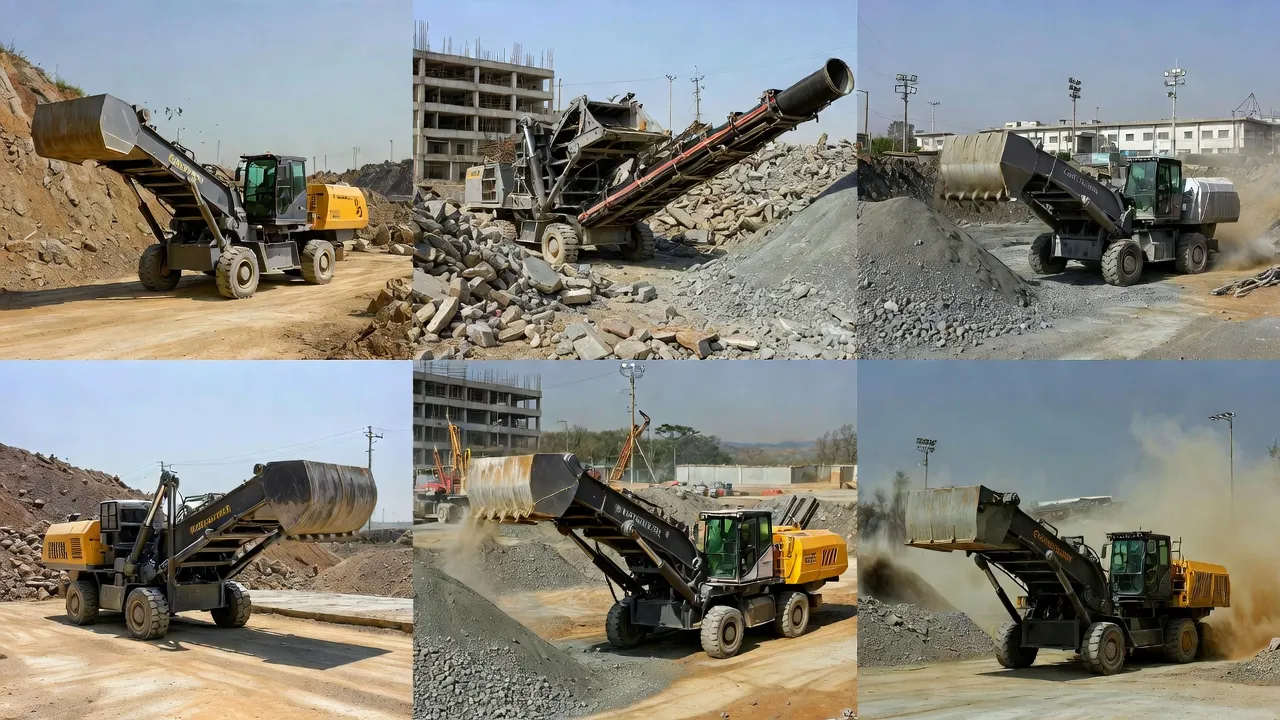
Artisanal Hard-Rock Gold Mining: Primary Crushing Without Fixed Infrastructure
Hard-rock artisanal gold mining in Australia — primarily across WA’s goldfields and Queensland’s historic gold districts — involves extracting quartz reef material and reducing it to a feed size suitable for small-scale gravity concentration, amalgamation, or cyanide leach processing. The primary crushing step, taking run-of-mine quartz reef from 150–300mm fragments to a workable 10–30mm mill feed size, has historically been a bottleneck for artisanal operators who lack access to conventional jaw crusher equipment. A tractor-mounted stone crusher fills this gap directly: it handles hard quartz material at throughputs that match the downstream processing circuit capacity of most artisanal operations, without the fixed installation requirement that a conventional jaw crusher demands.
The operational economics for artisanal hard-rock gold operators are compelling because gold ore has zero bulk commodity value until the metal is recovered — it is expensive rock that must be moved and processed as efficiently as possible. On-site primary crushing eliminates the transport of run-of-mine material to a fixed crushing contractor (typically 30–60km in WA gold country), converts bulky irregular ore into a consistent dense product that stores and handles more efficiently per cubic metre, and allows the operator to schedule processing runs that match their downstream circuit capacity rather than a crushing contractor’s availability schedule.
Remote Site Logistics: The Total Cost Advantage of Mobile Crushing
Remote mine sites across Australia face logistics challenges that well-serviced operations never encounter: road access that becomes impassable in the wet season; freight costs adding $8–$25 per kilometre per tonne of equipment or materials transported; and spare parts lead times measured in weeks. These factors shift equipment selection from a pure performance comparison to a total logistics cost assessment — where a technically superior fixed plant that requires a 40-tonne lowloader for access and a specialist maintenance contractor for component replacement generates a total cost of ownership that a tractor-mounted mobile crusher simply cannot match in remote deployment scenarios.
A Watanabe tractor stone crusher for Australian remote sites travels behind a standard farm trailer — no oversize load permit, no escort vehicle, no specialised transport booking required. Parts supply from Watanabe’s Condell Park NSW warehouse reaches most Australian regional centres within 2–4 business days via standard freight. For remote operations where a production-critical equipment failure costs $10,000–$50,000 per day in lost production, this parts availability is not a marginal consideration — it is a core element of the risk management case for Watanabe over alternatives with long import lead times.
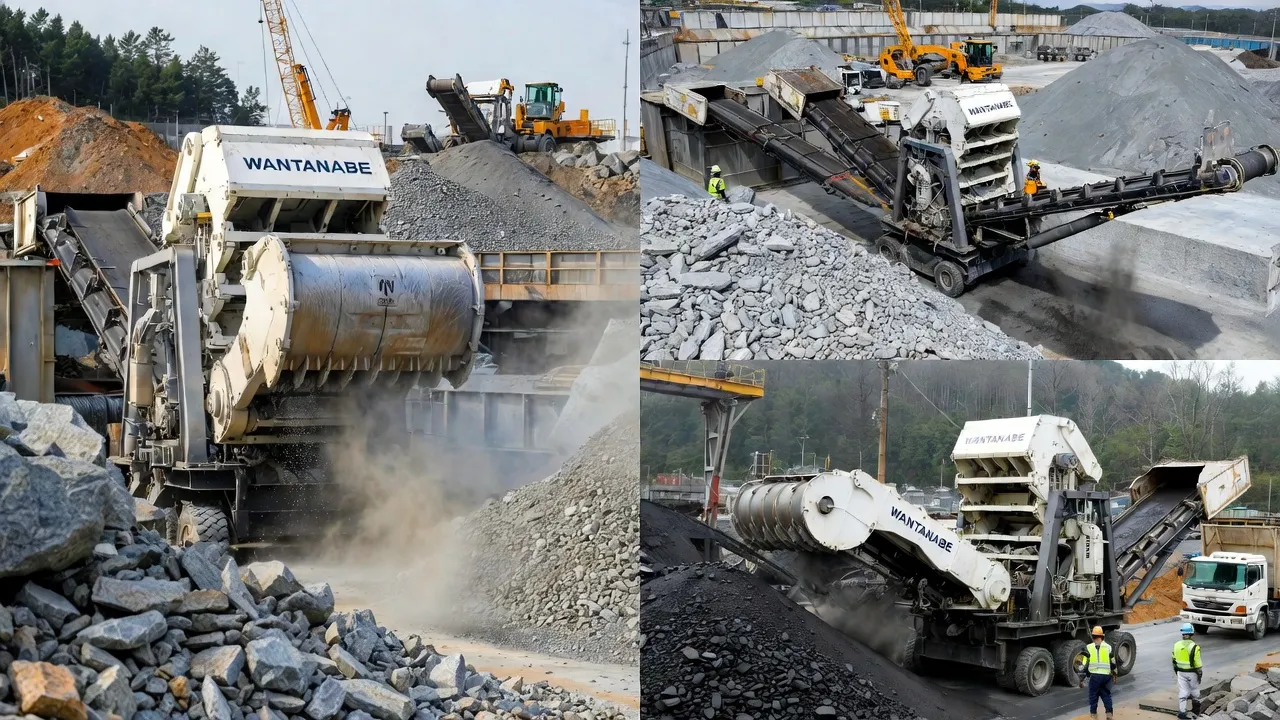
Mobile Crushing Circuit Integration: Step-by-Step Production Flow
Small Mine Mobile Crushing — Complete Production Flow
Quarry Development Crushing: Producing Infrastructure Material Before the Fixed Plant Is Built
New quarry developments face a familiar timing problem: the aggregate products the quarry will produce are needed to construct the quarry’s own access roads, hardstand areas, and processing infrastructure — yet the fixed crushing plant that will produce those products has not yet been installed. The tractor-mounted mobile stone crusher solves this efficiently: it arrives during the development phase, processes the first quarry blast immediately, and produces road base and fill aggregate used to construct the permanent access road and plant pad on which the eventual fixed plant will be built. The mobile crusher then remains on-site as a supplementary or backup unit after fixed plant commissioning, providing additional capacity during peak demand or covering production during scheduled plant maintenance windows.
This dual-phase utility — development tool in phase one, production supplement in phase two — substantially reduces the effective payback period for a mobile crusher investment in quarry development contexts. Rather than a single-purpose capital item idled once the fixed plant is commissioned, the Watanabe unit continues contributing to production economics across the quarry’s life in a support capacity that permanently installed equipment cannot fill.
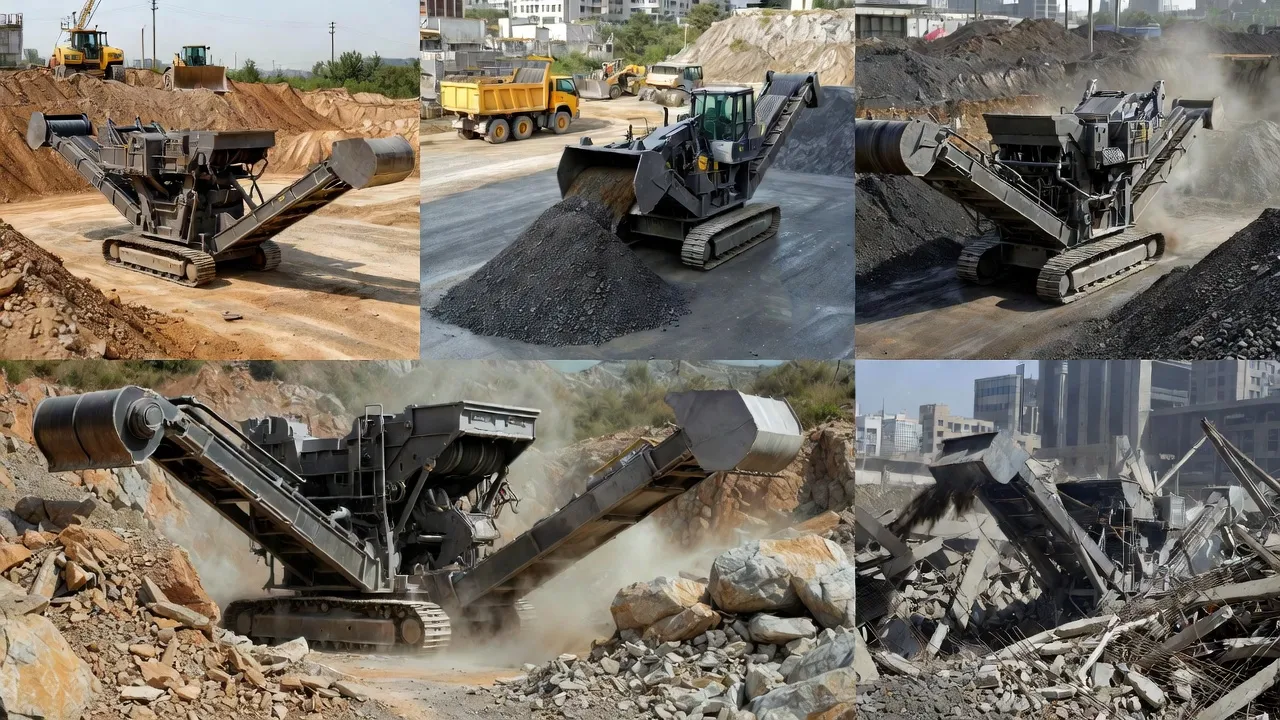
Alluvial Mining and Placer Deposits: Disaggregating Clay-Bound Material
Alluvial mining operations — processing placer gold deposits, heavy mineral sand concentrations, and alluvial gemstone workings — frequently encounter material that is not simply rock but a mixture of gravel, sand, clay, and valuable minerals bound together in a matrix requiring disaggregation rather than pure size reduction. A tractor-mounted crusher in alluvial applications functions primarily as a disaggregation device: breaking up clay-bound gravel masses that would otherwise report to concentration equipment as oversized lumps, releasing the valuable mineral fraction for effective gravity or magnetic separation. The difference between a well-disaggregated feed and a clay-lumpy one at the gold sluice or mineral concentrator can mean the difference between 70% and 95% recovery — a substantial revenue impact on even modest daily production volumes.
Clay-bound alluvial material requires specific operational management: larger screen apertures (50–75mm) to reduce grate blinding risk, regular purge cycles to clear chamber build-up, and water addition at the feed point to soften clay fractions and improve discharge flow. Watanabe’s technical team provides site-specific alluvial processing advice covering these operational parameters, significantly shortening the learning curve for operators without prior alluvial crushing experience.
Safety and Regulatory Compliance for Small Mine Crushing in Australia
Small mining operations are regulated under state mining legislation prescribing safety management plan requirements, dust management obligations, and equipment inspection standards that apply regardless of operation scale. A tractor-mounted crusher on a mining tenement is subject to the same principal hazard management requirements as a fixed crushing plant — equipment mobility does not reduce the operator’s duty of care. Critical safety requirements include guarding of all rotating components to AS 4024 standards; documented isolation and lockout procedures for maintenance; operator competency records confirming training on safe equipment operation; and a dust management plan addressing the 0.05 mg/m³ TWA respirable crystalline silica WES that applies from 1 July 2020 across all Australian jurisdictions.
Watanabe supplies all units with compliant guarding packages and provides a documentation template set covering operator training records, pre-start inspection checklists, and maintenance schedules — the core components of a crusher safety management system that satisfies state mining inspector requirements. This documentation support reduces the compliance burden on small operators who lack dedicated safety management staff.
Wet Season and Extreme Climate Operation: What to Expect in the Australian Outback
Remote mine sites across northern and central Australia face temperature extremes, dust loading, and seasonal rainfall patterns that push equipment beyond the conditions assumed by manufacturers designing for temperate climates. Watanabe’s standard configuration for Australian field conditions incorporates sealed bearing housings rated for the fine-particle dust environments of WA and SA arid zones, heat-tolerant lubricant specifications suitable for sustained operation at 40–48°C ambient temperature, and rotor assembly balancing that tolerates the thermal expansion differentials encountered when a machine runs at full capacity through a midday temperature peak then cools overnight to single digits. These design adaptations are not afterthought modifications — they reflect engineering decisions that emerge from sustained field experience with Australian operating conditions that offshore manufacturers without local market presence simply have not encountered.
For wet season operations in northern Australia, where tropical rainfall can render unsealed haul roads impassable for weeks, the tractor-mounted crusher’s light transport footprint is a decisive advantage: it can be moved to prepared high ground or under cover before wet season commencement, returned to production quickly when conditions improve, and its working platform maintained on a compacted gravel pad — which the crusher itself can produce in advance — that remains stable through moderate monsoon rainfall events that would flood access to heavier tracked plant.
Why Australian Small Mine Operators Trust Watanabe
The decision to choose Watanabe for small and remote mining crushing comes down to three factors that matter specifically in that context: reliability under sustained production load across Australian climatic extremes; parts availability without import lead times; and technical support from a team with direct experience of Australian mining conditions rather than a generic equipment supplier whose knowledge base reflects Northern European farmland. Watanabe’s Condell Park NSW team is reachable by phone and email during Australian business hours — not via a time-zone-shifted support centre — and provides application guidance based on direct knowledge of Australian ore types, operating environments, and regulatory requirements.
For small mine operators considering their first crusher purchase or evaluating alternatives to their current mobile crushing arrangement, Watanabe offers a pre-purchase technical assessment covering ore type compatibility, production target achievability, tractor fleet compatibility, and parts supply logistics for the specific site location. Contact the Watanabe team at [email protected] to begin the assessment for your specific mining application.
Featured Product for Small Mining & Mobile Crushing
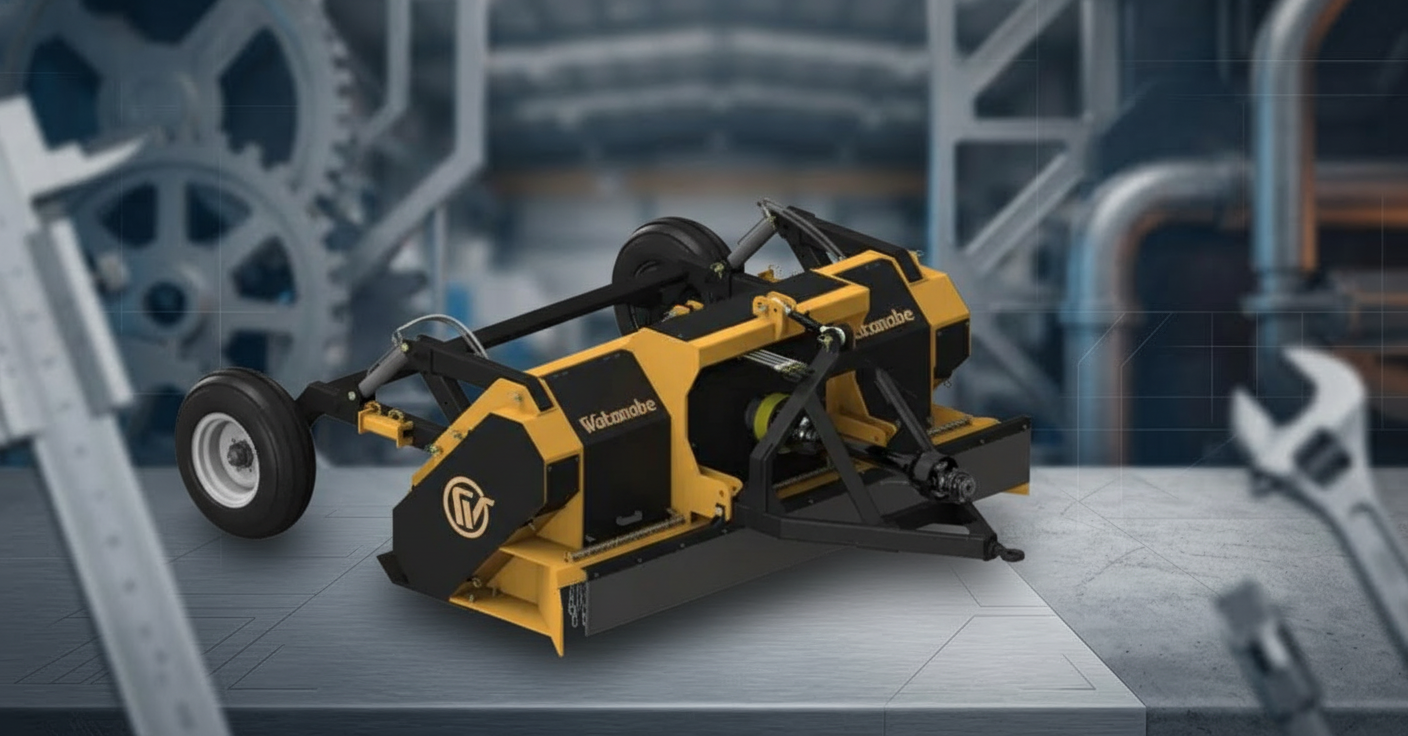
Watanabe Stone Crusher Thor 3.0
The Thor 3.0 is Watanabe’s high-output tractor-mounted stone crusher purpose-suited to small mining and mobile crushing operations demanding productive primary crushing without fixed infrastructure. Its 3000mm working width, heavy-duty rotor with field-replaceable chrome-manganese hammers, and interchangeable screen grates (10–75mm) cover the full range of small mine primary crushing needs — from fine gold ore mill feed preparation to coarse heap leach sizing and road base production for site access. PTO-driven from tractors starting at 120HP, the Thor 3.0 deploys on a standard farm trailer, connects in under 30 minutes, and begins production the same shift it arrives on site. Australian parts support from Watanabe’s Condell Park NSW warehouse.