
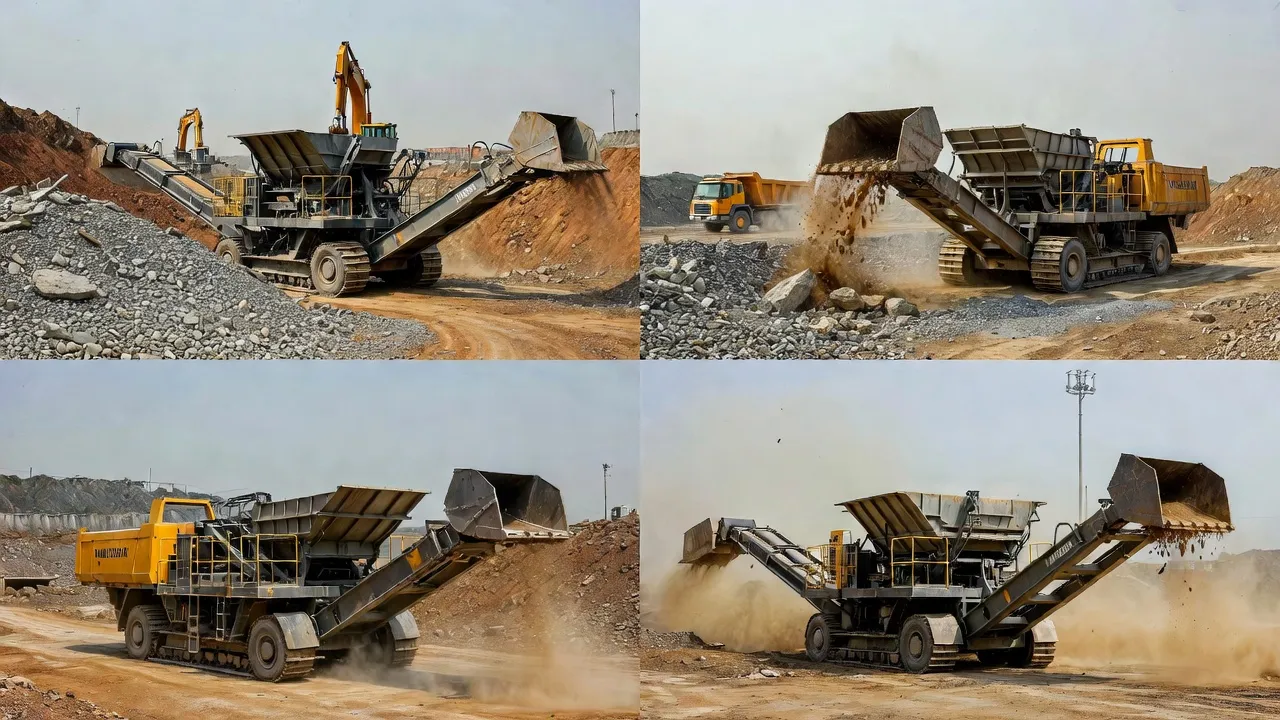
Why Normal Aggregate Supply Fails When Disaster Strikes
Australia’s disaster history — the 2019–20 Black Summer bushfires, the 2022 Queensland and NSW floods, Cyclone Seroja’s impact on WA’s Mid West in 2021, and the recurring flood events across the Murray-Darling Basin — demonstrates consistently that the infrastructure needed to recover from disasters is most difficult to supply precisely when the disaster occurs. Roads are destroyed or damaged, preventing aggregate trucks from reaching affected areas. Quarry access roads are blocked or washed out. Bridges are impassable. Commercial supply chains that function perfectly in normal conditions completely collapse in the first days and weeks after a major disaster event, leaving reconstruction teams with urgent aggregate demand and no viable supply pathway through conventional channels.
This supply chain collapse in disaster conditions is not a temporary inconvenience — it directly extends the human cost of the disaster. Communities remain cut off while roads cannot be restored because the aggregate to rebuild them cannot be delivered. Properties remain flooded while drainage restoration is delayed waiting for drainage aggregate that cannot arrive. The speed of reconstruction is almost entirely determined by the speed at which aggregate supply can be established — and in the areas most severely affected by major disasters, this means working backwards from what can be sourced locally rather than waiting for external supply chains to be restored. A mobile stone crusher that can produce aggregate from locally available rock immediately after disaster strikes — without depending on supply chains that have failed — is not simply a construction tool in disaster recovery contexts; it is a critical resilience asset that directly determines how quickly affected communities can be reconnected and restored.
Bushfire Recovery: Fire Trail Restoration and Emergency Access Road Reconstruction
Fire Trail Damage and Restoration Requirements
Major bushfires cause two distinct categories of damage to rural road and fire trail networks. First, the fire itself damages road surfaces by burning out the organic matter in granular base materials, softening bitumen seal on paved surfaces, and sometimes melting or warping culvert crossings and drainage structures. Second — and often more damaging to road trafficability — the loss of roadside vegetation from burning removes the root binding and transpiration that kept road formation slopes stable, triggering mass erosion events in the first rainfall after the fire that scour and destabilise the road formation far more severely than the fire itself. Post-fire road restoration requires aggregate for formation repair, culvert replacement bedding, and erosion repair works across hundreds to thousands of kilometres of fire trail and rural road network simultaneously.
On-Site Crushing for Immediate Fire Trail Restoration
In the fire-affected landscapes of south-eastern Australia — the ranges of NSW, VIC, SA, and WA where major bushfires have historically caused their greatest damage — outcropping granite, basalt, and quartzite are often the dominant accessible rock type along fire trails and access roads. These rock outcrops, which were previously managed as an obstacle to road clearing operations, become the primary aggregate source for immediate post-fire road restoration when they can be processed with a mobile stone crusher. A crusher deployed along the fire trail network can produce road base aggregate from roadside outcrops, process rock cleared from post-fire erosion repair earthworks, and supply culvert replacement bedding aggregate from the same rock sources — turning the rocky terrain that characterises many of Australia’s most fire-prone landscapes into a self-sufficient aggregate supply system for their own recovery.
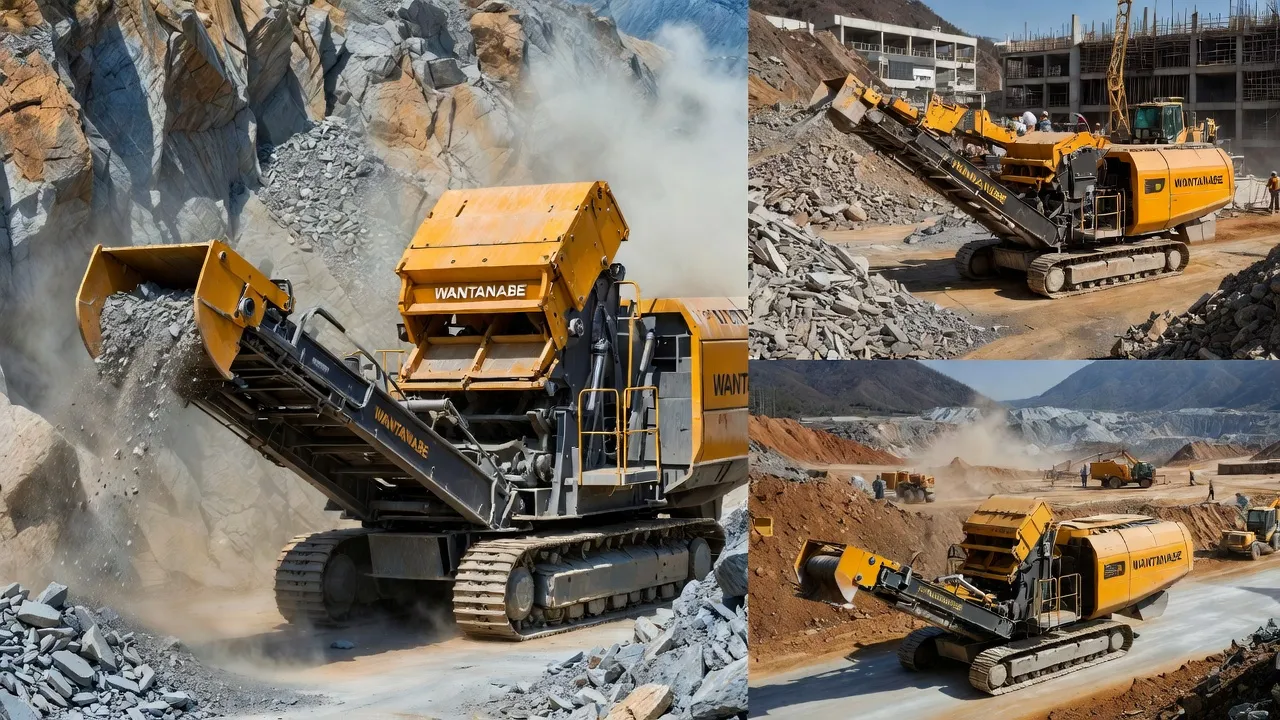
Flood Recovery: Road Reconstruction, Culvert Restoration, and Levee Repair
Flood damage to rural road networks is the largest single infrastructure cost of major flood events in Australia, as demonstrated by the 2022 NSW and QLD flood reconstruction bills that exceeded $5 billion in road-related expenditure alone. Flood damage to road infrastructure follows predictable patterns: high-velocity floodwaters scour away road base aggregate from low-lying sections, undermining surface seal and causing pavement failure; culverts are blocked or damaged, preventing drainage and causing ponding that softens and erodes formation; creek crossings are washed out, cutting communities from road access entirely; and road embankments on floodplain fills slump under saturation loading, requiring complete reconstruction from formation level. Each of these failure modes requires aggregate for restoration — and the areas most severely flood-affected are precisely those where normal aggregate supply is most disrupted.
A mobile stone crusher deployed in the flood-affected area — sourcing rock from the weathered rock outcrops and gravelly river terrace deposits that underlie most of Australia’s floodplain landscapes — produces road base and drainage aggregate from local sources at the point of need, without depending on the damaged road network to bring aggregate from distant quarries. The same crusher that produces road base for formation reconstruction can switch to producing drainage aggregate for culvert replacement, rip-rap for scour protection at creek crossings, and filter material for subsurface drainage restoration — covering the full range of flood recovery aggregate needs from a single deployment at each repair location.
Mobile Crusher Emergency Deployment — 72-Hour Response Timeline
Cyclone and Severe Storm Recovery: Northern Australia Infrastructure Repair
Cyclone damage in northern Australia — the Kimberley, Pilbara, and Top End of WA, and tropical QLD — creates infrastructure damage patterns that differ from flood damage further south. High-wind damage destroys structures rather than flooding them, and the associated storm surge and intense rainfall causes coastal erosion and short-duration but extremely high-velocity stream flows that scour road crossings rapidly and severely. Cyclone recovery aggregate demand is often concentrated at specific infrastructure nodes — a key bridge crossing, a highway link through a coastal cut, a community airstrip formation — rather than spread uniformly across a road network, because the damage is associated with the storm surge front rather than widespread inundation.
The geological character of northern Australia’s cyclone-prone regions — abundant laterite gravel, calcarete, and hard sandstone across the Kimberley and Pilbara — provides a practical aggregate supply from local sources that many southern regions lack. A portable rock crusher transported to the priority repair location via road or helicopter sling-load (for truly remote coastal sites) and driven from a locally available tractor provides the aggregate production capability needed to repair storm surge scour at creek crossings, restore airstrip formations, and rebuild community access roads from locally available laterite gravel and calcarete at production rates that allow the most critical infrastructure nodes to be restored within days of the cyclone passing.
Earthquake Recovery: Rubble Management and Emergency Infrastructure
While Australia’s earthquake risk is lower than many other regions, the 1989 Newcastle earthquake and 2010–2011 Canterbury sequence (affecting a large Australian expatriate community in Christchurch) demonstrate that urban earthquake damage can generate enormous volumes of collapsed masonry and concrete rubble that must be managed alongside the urgent need to restore road access and infrastructure for emergency services. Rubble from collapsed unreinforced masonry buildings — brick, stone, and mortar mixed demolition waste — can be processed through a stone crusher to produce crushed aggregate that serves multiple roles in the immediate recovery phase: temporary road hardening over damaged pavement, fill for collapsed service trenches, and emergency drainage aggregate around damaged buildings where groundwater intrusion is accelerating structural deterioration.
In earthquake recovery contexts, the speed of rubble clearance from roads is directly related to the speed at which emergency services can access affected communities, and the speed with which displaced residents can return to their properties to assess damage and begin recovery. A crusher that processes rubble at the clearance point — converting it to road fill rather than loading it onto trucks for disposal — reduces the number of truck movements required for rubble clearance by 40–60% (because crushed material is deposited directly on the road surface rather than carried away), significantly accelerating the road restoration rate with the same vehicle resources.
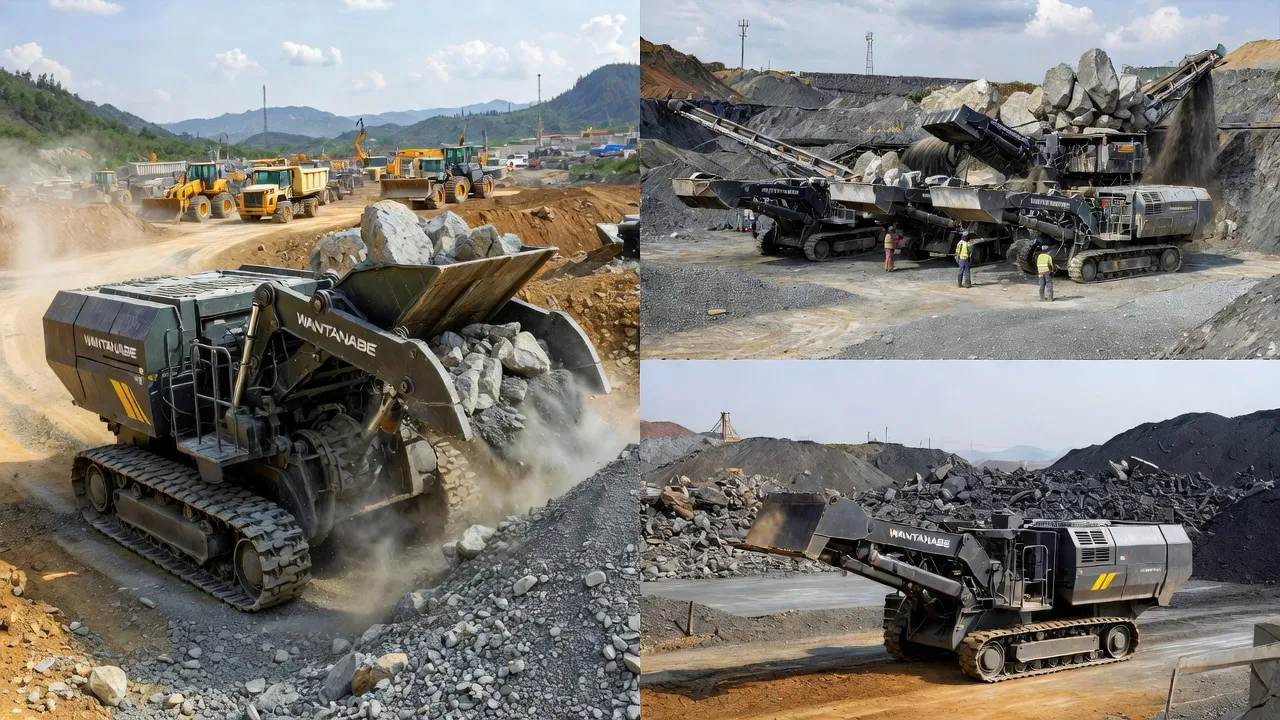
Pre-Positioning: Incorporating Crusher Capability into Disaster Preparedness Programs
The most effective use of mobile crushing in disaster recovery is not deploying the equipment after the disaster — it is having the equipment pre-positioned in the region before the disaster occurs, as part of a systematic disaster preparedness program. Councils, emergency management agencies, and state government road authorities that serve high-risk disaster areas (flood-prone river valleys, fire-prone ranges, cyclone-prone coastal regions) can incorporate a Watanabe mobile crusher into their emergency preparedness equipment inventory alongside generators, pumps, and elevated water storage tanks. Pre-positioned in a central depot within the risk area, the crusher can be on-site at the first priority repair location within hours of a disaster event — versus the multi-day lead time required to mobilise equipment from outside the affected region after the disaster has occurred and road access is already compromised.
Pre-positioning programs are most cost-effective when the crusher performs productive work in non-disaster periods — supplying aggregate for ongoing road maintenance, fire trail upgrades, or community infrastructure projects — so that it is an operating asset rather than a capital investment in standby equipment. In this dual-purpose model, the disaster response capability is essentially free, funded by the productive value the crusher delivers in normal operations. Several NSW and QLD councils in high-risk areas have adopted this approach following the 2022 flood events, recognising that the 2022 experience had demonstrated the futility of relying on distant quarry supply chains when the road network connecting them is destroyed.
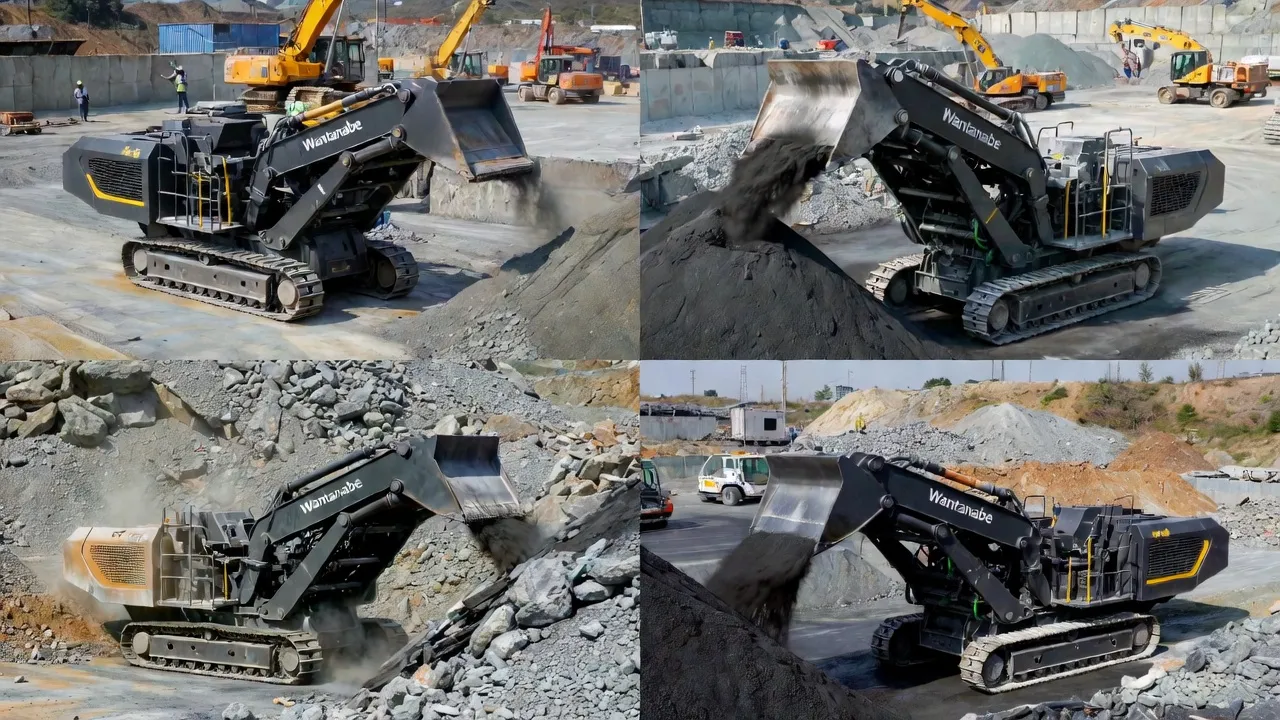
Government Funding Programs for Disaster Recovery Infrastructure
Australian state and federal disaster recovery funding programs — the Disaster Recovery Funding Arrangements (DRFA), the Local Roads and Community Infrastructure (LRCI) program, and various state-specific emergency recovery funds — typically fund the reconstruction of eligible public infrastructure to a pre-disaster standard, with allowance for betterment where the original construction standard was demonstrably inadequate. Mobile crushing from local borrow pits, where it reduces the cost of eligible reconstruction works, directly improves the efficiency of disaster recovery funding by enabling more infrastructure to be restored per dollar of government funding disbursed.
Local governments submitting disaster recovery funding claims that incorporate mobile crushing programs can document the cost reduction compared to commercial quarry supply — a difference that, in the context of DRFA claiming, allows funding claims to be prepared with lower per-unit material costs that may require less government expenditure per kilometre of road restored while achieving the same reconstruction outcome. For councils with active DRFA claims from recent disasters, this cost efficiency documentation is a practical benefit of mobile crushing programs beyond the operational advantages of aggregate self-sufficiency.
Operational Safety During Emergency Crushing Operations
Emergency recovery environments are, by definition, high-risk working environments: damaged infrastructure creates fall hazards, unstable ground conditions, and unexpected machinery encounters; time pressure creates the temptation to abbreviate safety procedures; fatigue from extended recovery operations impairs judgement; and the presence of multiple crews and agencies creates coordination hazards at busy work sites. Operating a stone crusher in this environment requires all the standard crusher safety precautions — exclusion zones, guarding, PTO protection, dust suppression — plus the specific situational awareness requirements of a post-disaster work site: confirmed ground stability at the crusher position before operation commences; communication protocols with other crews working in the vicinity; and clear fatigue management arrangements for crusher operators who may have been working extended hours since the disaster event.
Watanabe provides emergency recovery operational briefing materials that translate the crusher’s standard Safe Work Method Statement into the compressed format appropriate for emergency response contexts — covering the essential safety requirements in a format that can be communicated and implemented within the time constraints of emergency recovery operations rather than requiring the extended induction processes appropriate for routine construction sites. These materials are available for download from the Watanabe website and can be tailored to specific emergency response authority requirements on request.
Community Resilience: The Value of Local Crushing Capability in Recurring Disaster Areas
Communities in Australia’s recurring disaster zones — the Lismore area of north-east NSW, the flood corridors of south-west QLD, the fire-prone ranges of south-east Australia — have learned through repeated disaster experience that external support arriving days or weeks after an event, however well-intentioned, cannot provide the immediate response needed in the first 72 hours when the difference between a road restored and a community cut off for weeks is often determined. The communities and councils that have invested in local capability — equipment, skills, and pre-identified local resources — consistently demonstrate faster initial recovery than those dependent on external supply chains that cannot reach the affected area quickly enough to matter.
A Watanabe mobile crusher as part of a community or council’s disaster resilience equipment inventory represents a modest investment — particularly when it earns its cost in normal-operations aggregate production across the years between disaster events — that can directly determine whether a community spends days or weeks without road access after the next major event. This resilience framing, rather than the construction economics framing of normal aggregate production, is the most compelling case for disaster-prone communities to evaluate this investment: not “how much will this save on road base this year?” but “how many days of community isolation will this eliminate after the next flood?”
Watanabe’s Support for Disaster Recovery and Emergency Response Programs
Australia Watanabe Tractor Stone Crusher Co., Ltd recognises that disaster recovery customers have different requirements from standard commercial buyers: they need equipment available immediately, deployed quickly, supported with minimal lead time for parts, and operated in conditions that are less controlled than normal construction environments. Watanabe maintains stock of its primary crusher models for rapid dispatch — standard orders from existing customers can be despatched same-day; emergency new customer orders within 2–3 business days — and the Condell Park NSW parts warehouse provides overnight freight availability for all high-wear consumables to most disaster-affected regional areas in Australia.
For emergency management agencies and councils developing disaster resilience plans that include mobile crushing capability, Watanabe provides pre-disaster procurement consultation — advising on model selection, tractor compatibility, spare parts inventory requirements, operator training needs, and pre-identified rock source assessment for the local risk area — so that when a disaster occurs, the equipment and the knowledge to use it effectively are both already in place. Contact the Watanabe team at tractor-stone-crusher.com/contact-us/ or email [email protected] to discuss your region’s disaster resilience requirements and the Watanabe equipment options best suited to your local rock types and infrastructure recovery priorities.
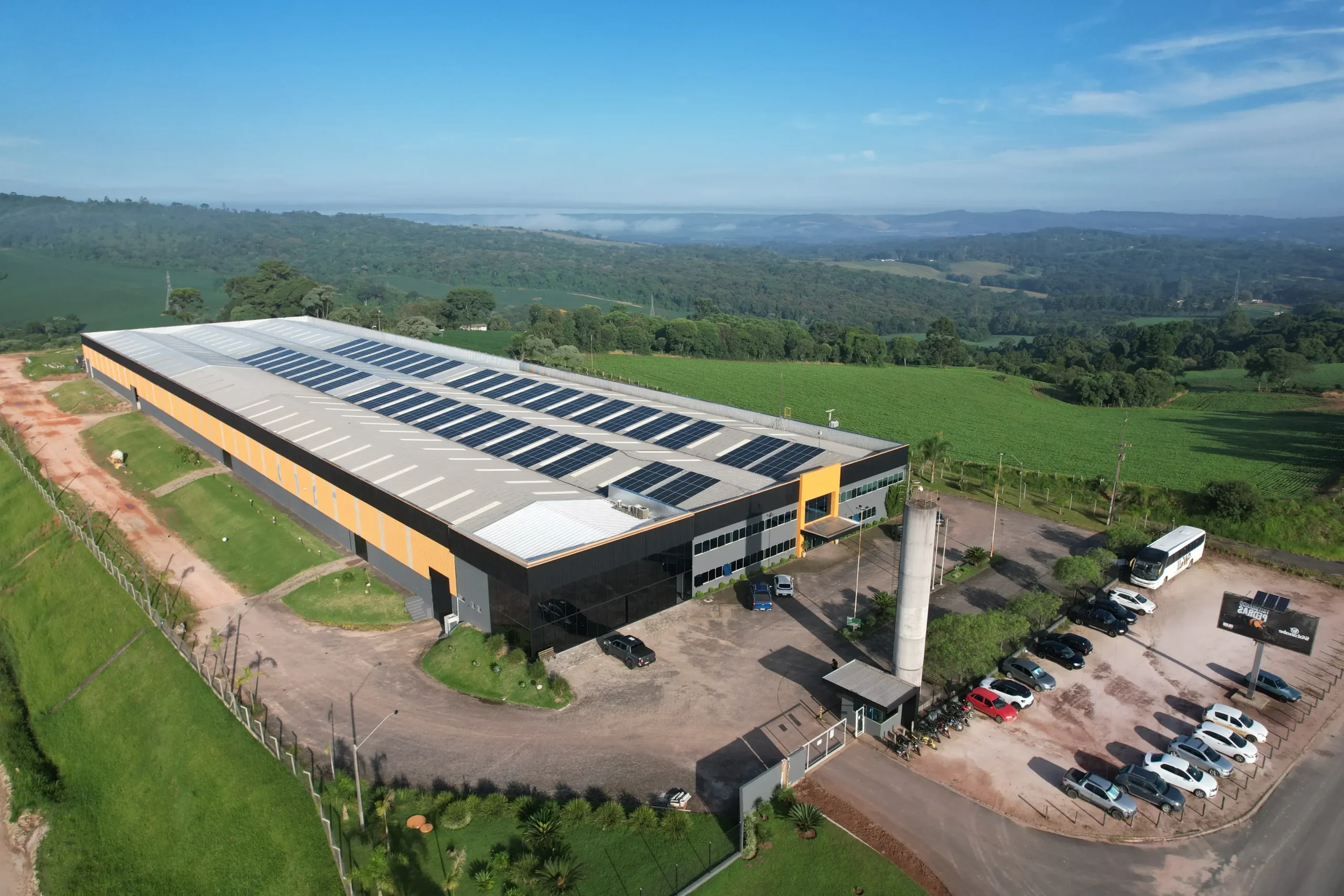
Featured Product for Disaster & Emergency Recovery
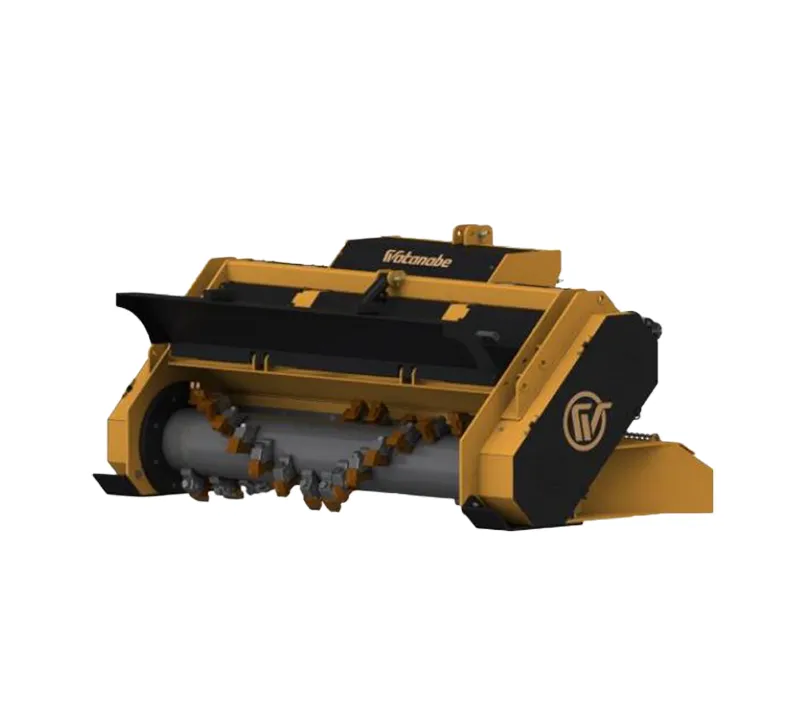
Watanabe Stone Crusher Thor 2.4 — Kit Drawbar
The Thor 2.4 Kit Drawbar is Watanabe’s recommended model for disaster recovery and emergency response applications. Its drawbar connection provides superior stability on the rough, uneven terrain common to post-disaster work environments. At 2400mm working width and tractor requirement from 100HP, it couples to the widest range of available site tractors — including agricultural and construction tractors commonly found in disaster-affected rural areas. The compact transport envelope allows movement on damaged roads and via standard trailers without over-size load permits. Interchangeable screen grates from 10–75mm cover all disaster recovery aggregate specifications. Full spare parts complement for extended remote deployment included as standard. Same-day dispatch from Condell Park NSW for emergency orders.