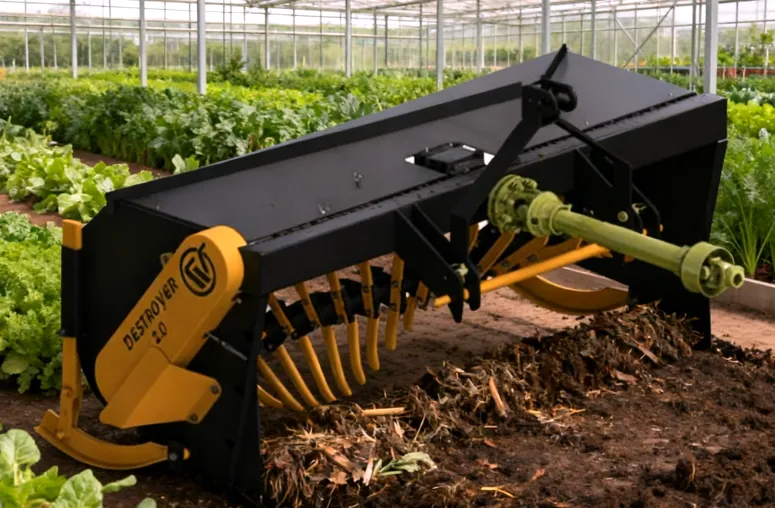
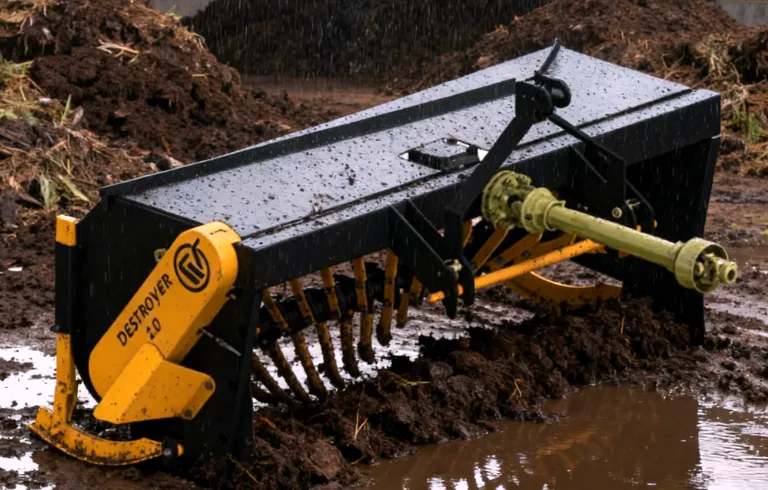
The Compost Barn by Australia Watanabe Tractor Stone Crusher Co., Ltd. is a durable, efficient waste-to-compost system, ideal for large farms, livestock operations, and mixed-crop farming. With automated temperature, humidity, and airflow controls, it ensures effective composting in all climates. Compatible with John Deere 6R Series, Case IH Magnum Series, and New Holland tractors, it provides a scalable solution for medium to large-scale farms, helping farmers manage waste, improve soil health, and reduce fertilizer reliance with minimal maintenance.
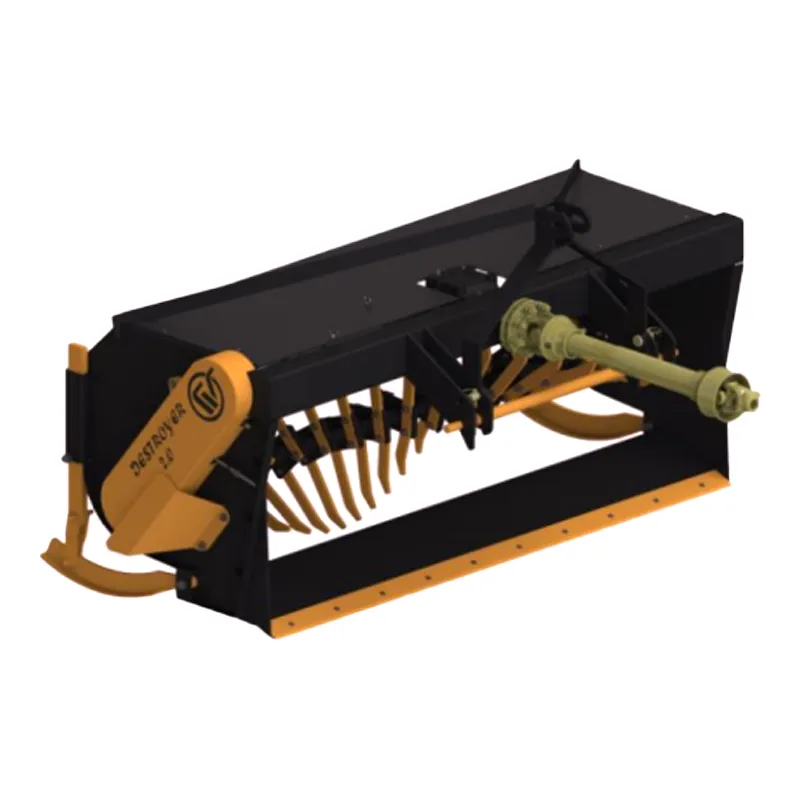
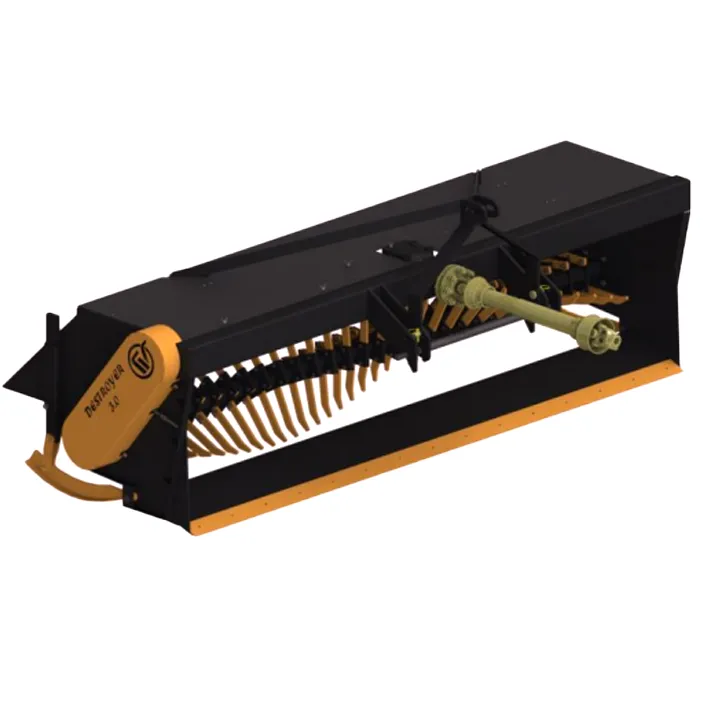
Compost Barn
Product parameters
| TECHNICAL DATA | DESTROYER 2.0 | DESTROYER 3.0 |
|---|---|---|
| Weight | 460 Kg. | 660 Kg. |
| Bottom linkage category | 2 | 2 |
| Working Width | 2 m | 3 m |
| Working Depth | 80 cm. | 80 cm. |
| Engine power (min.) | 75 cv | 80 cv |
| Cardan shaft input revolutions | 540 RPM | 540 RPM |
What is it?
A Compost Barn is an efficient system designed to process agricultural waste, transforming it into nutrient-rich organic fertilizer. It is specifically built to handle farm waste such as plant residues, animal manure, and other organic materials, converting them into high-quality compost that can enhance soil health and improve crop yields. With an increasing focus on sustainability in agriculture, the Compost Barn has become an essential tool for Australian farmers looking to reduce waste and enhance the productivity of their land.
Typically, a Compost Barn consists of multiple composting sections that can accommodate various types of organic waste. The system includes temperature and humidity controls, as well as airflow mechanisms, all designed to accelerate the composting process. This enables the waste to be converted into compost in just a few months. For Australian farmers, the Compost Barn is not just a waste management solution but also a tool to improve soil health and increase crop productivity, especially in regions like Victoria and Queensland.
Applications
Compost Barn systems are widely used across Australia, particularly on large farms and those with livestock. For mixed farming operations that combine crop growing and livestock raising, the Compost Barn provides a perfect solution for managing manure and plant waste. It helps improve soil fertility, reduces the need for chemical fertilizers, and promotes sustainable farming practices.
In Australia's hot and dry climate, Compost Barn systems are designed to operate efficiently, even in challenging conditions. Whether in the arid interior or the more temperate coastal regions, these systems provide a reliable and effective way to recycle farm waste into valuable fertilizer. For farm operations across the country, from the wheat belt of Western Australia to the fertile farmlands of New South Wales, the Compost Barn is becoming an essential tool for reducing waste and enhancing farm sustainability.
How it works
The Compost Barn operates based on the natural composting process of organic waste. Composting is a biological process where microorganisms break down organic material, turning it into valuable compost. Initially, agricultural waste such as crop residues and manure is placed into the composting sections of the barn. The system’s temperature and humidity controls create an ideal environment for microorganisms, accelerating the breakdown of waste.
During the composting process, the microorganisms use carbon, nitrogen, and other elements from the waste to grow and reproduce. As the process continues, the temperature inside the barn rises to between 50-70°C, which not only speeds up the decomposition but also kills any harmful pathogens and pests that may be present. Proper airflow is also crucial, as it ensures the right oxygen levels for the microorganisms, helping the composting process remain aerobic and efficient.
After several months, the process is complete, and the result is high-quality organic compost rich in essential nutrients for plants. Farmers can then use this compost to fertilize their crops, improving soil quality and increasing crop yields. The Compost Barn system provides farmers with a cost-effective way to recycle waste, improve soil health, and reduce dependency on chemical fertilizers.
Key Advantages
-
Efficient Waste Processing
The Compost Barn is capable of quickly and efficiently processing large amounts of agricultural waste, reducing the accumulation of waste on farms and addressing the waste management challenges faced by farmers. -
Improved Soil Quality
The organic compost produced by the system is rich in essential nutrients that improve soil structure and fertility. By increasing the organic matter content in the soil, the Compost Barn helps promote healthier and more productive land. -
Reduced Dependence on Chemical Fertilizers
By generating organic compost from farm waste, the Compost Barn reduces the need for chemical fertilizers, lowering farm costs and minimizing environmental impact. This is especially important for farmers looking to adopt more sustainable practices. -
Eco-Friendly and Sustainable
The Compost Barn provides an environmentally friendly way to handle agricultural waste. It aligns with the increasing demand for sustainable farming practices in Australia, helping to reduce the carbon footprint of farming operations. -
Adaptability to Australian Climate
Compost Barn systems are designed to function efficiently in the diverse and sometimes extreme climates of Australia. Whether facing the dry conditions of the interior or the humidity of coastal regions, these systems operate effectively to provide farmers with reliable composting results.
Maintenance and Care
Maintaining a Compost Barn system is relatively simple and involves regular checks and necessary cleaning. The key areas to monitor include the temperature control system, humidity controls, and ventilation. Regular inspection ensures these components are working properly and maintaining the optimal environment for composting.
After each composting cycle, it is important to clean the system and remove any excess waste or debris to maintain composting efficiency. Periodic checks of the drainage system are also necessary to prevent water buildup, which can interfere with the composting process. With regular maintenance, the Compost Barn system can operate efficiently for years, providing farmers with a reliable waste management and fertilization solution.
How to Choose the Right Compost Barn
When selecting a Compost Barn for your farm, there are several factors to consider:
-
Farm Size
For larger farms, it is advisable to choose a Compost Barn system with a wider working width to increase efficiency. The size and capacity of the system should match the amount of waste your farm generates, ensuring that the system can handle your composting needs. -
Climate Conditions
Australia’s climate varies greatly, so it’s important to select a Compost Barn system that is suited to your local conditions. In drier areas, moisture retention features are essential, while in more humid regions, adequate drainage and ventilation become more critical. -
Budget and Value for Money
Different brands of Compost Barn systems come at various price points. It’s important to evaluate both the cost and the benefits offered by the system. Australia Watanabe Tractor Stone Crusher Co., Ltd offers high-performance, cost-effective Compost Barn systems that provide excellent value for money, making them a great choice for many Australian farmers.
Core Components
-
Compost Barn Structure
The structure of the compost barn is one of the most critical components. A durable, well-designed structure ensures that the system can withstand tough weather conditions and operate effectively over the long term. -
Temperature Control System
The temperature control system is essential to managing the composting process. It ensures that the barn maintains the right temperature for microorganism activity, which accelerates the breakdown of organic material. -
Humidity Control Device
Maintaining the right humidity level is crucial for efficient composting. The humidity control system ensures that the composting process stays within optimal moisture levels, promoting the activity of beneficial microbes. -
Ventilation System
Proper airflow is necessary to provide oxygen to the microorganisms and prevent anaerobic conditions that can slow down the composting process. The ventilation system is key to maintaining the aerobic nature of the composting process.
About Us: Proven Track Record in Tough Conditions
Since 2005, Australia Watanabe Tractor Stone Crusher Co., Ltd has been building reliable machinery for agricultural and construction use. Our products, including Compost Barn systems, are designed to perform in Australia's harsh and diverse conditions, ensuring reliable waste management and soil improvement for farmers across the country. From the wheatbelt of Western Australia to the farmlands of New South Wales, our equipment has been tested and proven to handle the demands of Australian farming.
Our equipment is manufactured using high-quality materials, ensuring durability and longevity. With a focus on low-maintenance designs, our Compost Barn systems are easy to operate and maintain, allowing farmers to focus on their agricultural work rather than complex machinery upkeep.
The Best Compost Barn Brands
Australia Watanabe Tractor Stone Crusher Co., Ltd
Known for its cost-effective yet reliable Compost Barn systems, Watanabe offers excellent value for farmers seeking affordable, high-performance composting solutions.
When choosing the right system for your farm, it’s important to weigh the benefits of each option and consider your farm’s specific needs. Australia Watanabe Tractor Stone Crusher Co., Ltd offers a solid balance of performance and cost-effectiveness, making it a top choice for many Australian farmers.